Introduction
At first glance, the iPhone 8 still looks like an attractive budget iPhone in 2026. According to the UpTrade Price Tracker, Certified Used / Refurbished iPhone 8 models start at around $110+. However, despite its low price, we don't recommend buying the iPhone 8 in 2026.
The biggest reason is software support. The iPhone 8 is limited to iOS 16 and cannot upgrade to newer iOS versions. As Apple continues to release new features and developers optimize apps for newer iOS releases, the iPhone 8 will become increasingly outdated over time.
Another issue is availability. Since the iPhone 8 was released in 2017, Certified Used / Refurbished inventory has become very limited. Many remaining listings come from individual sellers or open marketplaces instead of trusted professional refurbishers, making it harder to find a reliable device.
In this guide, we'll explain why the iPhone 8 is no longer a smart buy, compare it with the iPhone SE (2nd Gen) and iPhone SE (3rd Gen), and help you choose the best Certified Used / Refurbished iPhone for your budget.
TL;DR: Our Recommendation
If you're considering a Certified Used / Refurbished iPhone 8 in 2026, here's our recommendation.
| Model |
Starting Certified Used / Refurbished Price* |
Software Support |
Recommendation |
| iPhone 8 |
$110+ |
Up to iOS 16 |
❌ Not Recommended |
| iPhone SE (3rd Gen) |
$120+ |
Supports iOS 27 |
⭐ Best Overall Choice |
| iPhone SE (2nd Gen) |
$90+ |
Supports iOS 27 |
⭐ Best Budget Choice |
*Prices are based on the UpTrade Price Tracker and may vary depending on storage capacity, condition, color, and seller.
iPhone 8 in 2026
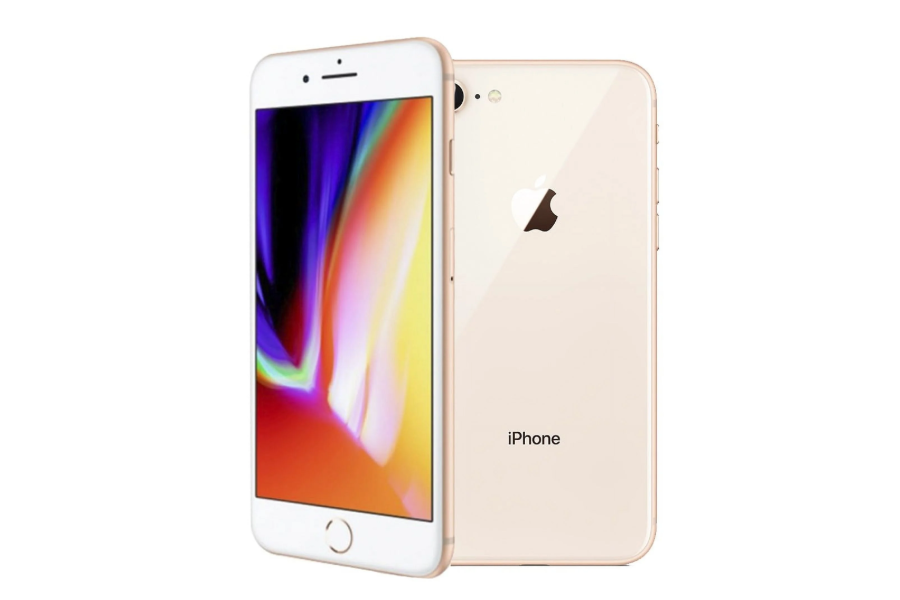
When the iPhone 8 launched in 2017, it was one of Apple's best smartphones. It introduced wireless charging, improved performance with the A11 Bionic chip, and continued the popular Home Button design with Touch ID. Nearly a decade later, however, the smartphone landscape has changed dramatically.
While the iPhone 8 can still make calls, send messages, browse the web, and run many everyday apps, it is no longer a good long-term purchase. Its software support has ended, Certified Used / Refurbished inventory is becoming increasingly scarce, and much newer iPhones are available for nearly the same price.
Let's take a closer look at how the iPhone 8 holds up in 2026.
Price and Availability
According to the UpTrade Price Tracker, Certified Used / Refurbished iPhone 8 models start at around $110+ in 2026. While that may seem inexpensive, there is one major drawback: availability.
Because the iPhone 8 was released in 2017, many professional refurbishers have already sold through their inventory. As a result, Certified Used / Refurbished stock has become increasingly limited, leaving fewer options for buyers.
For only about $10 more, you can purchase a Certified Used / Refurbished iPhone SE (3rd Gen), which offers a much faster processor, 5G connectivity, and support for iOS 27. Even the iPhone SE (2nd Gen), starting around $90+, is now a better value than the iPhone 8.
Software Support
The biggest reason we don't recommend buying the iPhone 8 in 2026 is software support.
The iPhone 8 is limited to iOS 16 and cannot be upgraded to newer iOS versions. This means you'll miss out on the latest Apple features, improvements, and many AI-powered capabilities introduced in recent releases.
Although the iPhone 8 may continue receiving occasional security updates for a limited time, it has reached the end of its major software lifecycle. Over time, more apps will require newer versions of iOS, reducing compatibility and shortening the phone's useful lifespan.
In comparison, both the iPhone SE (2nd Gen) and iPhone SE (3rd Gen) support iOS 27, giving them several more years of usability.
Performance
The iPhone 8 is powered by Apple's A11 Bionic chip. While it was incredibly fast when it launched, it now trails far behind newer Apple processors.
For basic tasks like calling, texting, web browsing, email, and light social media use, the iPhone 8 remains usable. However, newer apps, multitasking, gaming, and photo editing feel noticeably slower compared to the A13 Bionic in the iPhone SE (2nd Gen) and the A15 Bionic in the iPhone SE (3rd Gen).
If you plan to keep your next phone for several years, the newer SE models offer significantly better long-term performance.
Camera
The iPhone 8 features a single 12MP rear camera and a 7MP front-facing camera. It still takes good photos in bright daylight and records up to 4K video, but it lacks many of the camera improvements found on newer iPhones.
Features such as Night Mode, Deep Fusion, Smart HDR, and Photographic Styles are unavailable on the iPhone 8. As a result, low-light photography and overall image quality are noticeably behind even Apple's newer budget iPhones.
For casual snapshots, the camera is still serviceable, but don't expect the same quality you'll get from newer iPhone models.
Battery Life
Battery health is another concern when buying an iPhone 8. Since the newest units are nearly nine years old, many original batteries have experienced significant wear.
If you decide to purchase one, choose a Certified Used / Refurbished device from a trusted professional reseller so you know the battery has been inspected and tested. Even then, the battery life is generally shorter than newer iPhones built with more efficient processors.
Considering the minimal price difference, the iPhone SE (2nd Gen) and especially the iPhone SE (3rd Gen) provide a much better overall experience for everyday use.
Better Alternatives
Although the iPhone 8 still works for basic tasks, it's difficult to recommend in 2026. For nearly the same price—or even less—you can buy a much newer iPhone with faster performance, longer software support, and better long-term value.
Our top recommendations are the iPhone SE (3rd Gen) and the iPhone SE (2nd Gen). Both retain the familiar Home Button and Touch ID experience of the iPhone 8 while offering significant upgrades where they matter most.
💡 Best Overall Alternative: iPhone SE (3rd Gen)
Starting at around $120+, the iPhone SE (3rd Gen) is our top recommendation for anyone considering an iPhone 8. For only about $10 more, you get a phone that feels years newer.
The biggest upgrade is the A15 Bionic chip, which is several generations newer than the iPhone 8's A11 Bionic. Everyday tasks are faster, apps load more quickly, multitasking is smoother, and the phone is much better equipped to handle future iOS updates.
The iPhone SE (3rd Gen) also supports 5G, allowing faster mobile data speeds where available. More importantly, it supports iOS 27, giving it several more years of software updates compared to the iPhone 8.
If your budget allows an extra $10, the iPhone SE (3rd Gen) offers dramatically better long-term value and is one of the best Certified Used / Refurbished iPhones you can buy in 2026.
💡 Best Budget Alternative: iPhone SE (2nd Gen)
If you're looking for the lowest possible price, the iPhone SE (2nd Gen) is an excellent budget option. According to the UpTrade Price Tracker, Certified Used / Refurbished models recently dropped below $100, starting at around $90+ in 2026.
Even though it doesn't support 5G, it still features the faster A13 Bionic chip and supports iOS 27. That means you'll receive newer features, better app compatibility, and a much longer software lifespan than the iPhone 8.
Perhaps the biggest surprise is that the iPhone SE (2nd Gen) is actually less expensive than many refurbished iPhone 8 models while offering better overall value. Unless you specifically want the iPhone 8, the iPhone SE (2nd Gen) is the smarter purchase.
Why We Recommend the iPhone SE Models Instead
All three phones feature a compact design with a 4.7-inch Retina HD display, a Home Button with Touch ID, and a single rear camera. If you enjoy the classic iPhone design, you'll feel right at home using either iPhone SE model.
The difference is what's inside. The iPhone SE (2nd Gen) and iPhone SE (3rd Gen) use much newer Apple processors, support the latest iOS versions, and will remain compatible with apps for much longer. The iPhone SE (3rd Gen) also adds 5G connectivity, making it the most future-proof option.
For these reasons, we don't recommend purchasing a Certified Used / Refurbished iPhone 8 in 2026. Spending just a little more—or even a little less—gets you a phone that will provide a significantly better experience for years to come.
iPhone 8 vs iPhone SE (2nd Gen) vs iPhone SE (3rd Gen)
| Feature |
iPhone 8 |
iPhone SE (2nd Gen) |
iPhone SE (3rd Gen) |
| Release Year |
2017 |
2020 |
2022 |
| Starting Certified Used / Refurbished Price |
$110+ |
$90+ |
$120+ |
| Processor |
A11 Bionic |
A13 Bionic |
A15 Bionic |
| Latest Supported iOS |
iOS 16 |
iOS 27 |
iOS 27 |
| 5G Support |
No |
No |
Yes |
| Display |
4.7-inch Retina HD |
4.7-inch Retina HD |
4.7-inch Retina HD |
| Main Camera |
12MP |
12MP |
12MP |
| Front Camera |
7MP |
7MP |
7MP |
| Home Button / Touch ID |
Yes |
Yes |
Yes |
| Wireless Charging |
Yes |
Yes |
Yes |
| Recommendation |
❌ Not Recommended |
⭐ Best Budget Option |
⭐ Best Overall Choice |
Software Support
This is the biggest difference between these three iPhones. The iPhone 8 is limited to iOS 16, meaning it no longer receives major iOS upgrades. As apps continue to require newer versions of iOS, compatibility will gradually decline.
Both the iPhone SE (2nd Gen) and iPhone SE (3rd Gen) support iOS 27, giving them years of additional software support, better app compatibility, and access to Apple's latest features.
If you plan to keep your phone for more than a year or two, the iPhone SE models are far better long-term investments.
Performance
The processor is another major reason to skip the iPhone 8.
The A11 Bionic still handles basic tasks like calling, texting, web browsing, and social media, but it struggles more with demanding apps and multitasking compared to newer chips.
The A13 Bionic in the iPhone SE (2nd Gen) delivers a noticeable performance improvement, while the A15 Bionic in the iPhone SE (3rd Gen) offers flagship-level speed that's still excellent in 2026.
If performance matters, the iPhone SE (3rd Gen) is the clear winner.
5G Connectivity
Neither the iPhone 8 nor the iPhone SE (2nd Gen) supports 5G. While 4G LTE is still sufficient for many users, 5G networks continue to expand and offer faster download speeds and lower latency.
The iPhone SE (3rd Gen) is the only model in this comparison with 5G connectivity, making it the most future-proof choice for students and anyone planning to keep their phone for several years.
Price and Value
Price is where the iPhone 8 completely loses its advantage.
The iPhone 8 starts at around $110+, while the newer iPhone SE (3rd Gen) starts at only about $120+. For roughly $10 more, you receive a significantly newer processor, 5G support, and several more years of software updates.
Even more surprising, the iPhone SE (2nd Gen) recently dropped below $100, starting at around $90+. It costs less than many refurbished iPhone 8 models while offering a newer A13 processor and support for iOS 27.
From a value perspective, there's very little reason to choose the iPhone 8 over either iPhone SE model.
Which iPhone Should You Buy?
If your budget is around $120+, the iPhone SE (3rd Gen) is the clear winner. It delivers the best combination of performance, software support, and long-term value.
If you're trying to spend under $100, the iPhone SE (2nd Gen) is one of the best budget iPhones available in 2026.
We don't recommend buying the iPhone 8 unless you already own one and simply want to continue using it. For new buyers, both iPhone SE models are smarter purchases and will provide a much better experience over the next several years.
Conclusion
While the iPhone 8 was an excellent smartphone when it launched in 2017, it's no longer a smart purchase in 2026. Although Certified Used / Refurbished models start at around $110+, the limited supply and outdated software support make it difficult to recommend.
The biggest drawback is that the iPhone 8 is limited to iOS 16 and cannot upgrade to newer iOS versions. As apps continue to evolve, you'll miss out on new features, improved security, and long-term compatibility.
Instead, we recommend the iPhone SE (3rd Gen), which starts at around $120+. For only about $10 more, you get the powerful A15 Bionic chip, 5G connectivity, support for iOS 27, and several more years of software updates.
If your budget is under $100, the iPhone SE (2nd Gen) is another excellent option. Starting at around $90+, it supports iOS 27 and offers a faster A13 Bionic chip while costing even less than many refurbished iPhone 8 models.
Whether you're buying your first iPhone or replacing an older device, both iPhone SE models offer significantly better long-term value than the iPhone 8. Before purchasing, compare Certified Used / Refurbished prices from trusted professional resellers to make sure you're getting the best deal.
FAQ
1. Is the iPhone 8 still worth buying in 2026?
No. We don't recommend buying the iPhone 8 in 2026. Although Certified Used / Refurbished models start at around $110+, the phone is limited to iOS 16 and has much shorter software support than newer iPhones. The iPhone SE (3rd Gen) and iPhone SE (2nd Gen) offer much better value.
2. What is the latest iOS version supported by the iPhone 8?
The iPhone 8 is limited to iOS 16. It cannot be upgraded to newer iOS versions such as iOS 17 through iOS 27.
3. Is the iPhone 8 still receiving security updates?
Apple may occasionally release security updates for older iPhones, but the iPhone 8 no longer receives major iOS upgrades. Over time, software support and app compatibility will continue to decline.
4. Why is the iPhone SE (3rd Gen) a better choice than the iPhone 8?
For only about $10 more, the iPhone SE (3rd Gen) offers the A15 Bionic chip, 5G connectivity, support for iOS 27, and several more years of software updates. It delivers significantly better long-term value than the iPhone 8.
5. Is the iPhone SE (2nd Gen) better than the iPhone 8?
Yes. The iPhone SE (2nd Gen) features the newer A13 Bionic chip, supports iOS 27, and now starts at around $90+, making it both newer and less expensive than many refurbished iPhone 8 models.
6. Why is refurbished iPhone 8 inventory so limited?
The iPhone 8 was released in 2017, and many Certified Used / Refurbished devices have already been sold. As a result, trusted professional resellers now have limited inventory, making the phone increasingly difficult to find.
7. Is the iPhone 8 still good enough for basic use?
Yes. The iPhone 8 can still handle calls, texting, web browsing, email, and light social media use. However, newer apps and future software requirements make it a poor long-term choice compared to newer iPhones.
8. Where can I buy a Certified Used / Refurbished iPhone 8?
You can compare Certified Used / Refurbished iPhone 8 prices from trusted professional resellers on UpTrade. Comparing prices helps you find the best deal while avoiding unreliable marketplace listings.
9. Does the iPhone 8 support 5G?
No. The iPhone 8 only supports 4G LTE. If you want 5G connectivity, the iPhone SE (3rd Gen) is the better choice and starts at only about $120+ Certified Used / Refurbished.
10. What's the cheapest refurbished iPhone that still supports iOS 27?
According to the UpTrade Price Tracker, the iPhone SE (2nd Gen) starts at around $90+ in 2026. It is one of the most affordable Certified Used / Refurbished iPhones that still supports iOS 27, making it an excellent budget choice.
 United States
 Sale
Sale United Kingdom
 Canada