Introduction
Buying an older iPhone in 2026 can save you a lot of money—but there is also a point where an iPhone simply becomes too old to recommend.
That’s because age affects much more than just speed.
Older iPhones eventually lose:
- iOS updates
- Security support
- App compatibility
- Battery reliability
- Long-term usability
And in 2026, the gap between “still usable” and “still worth buying” has become much larger.
Quick Answer (TL;DR)
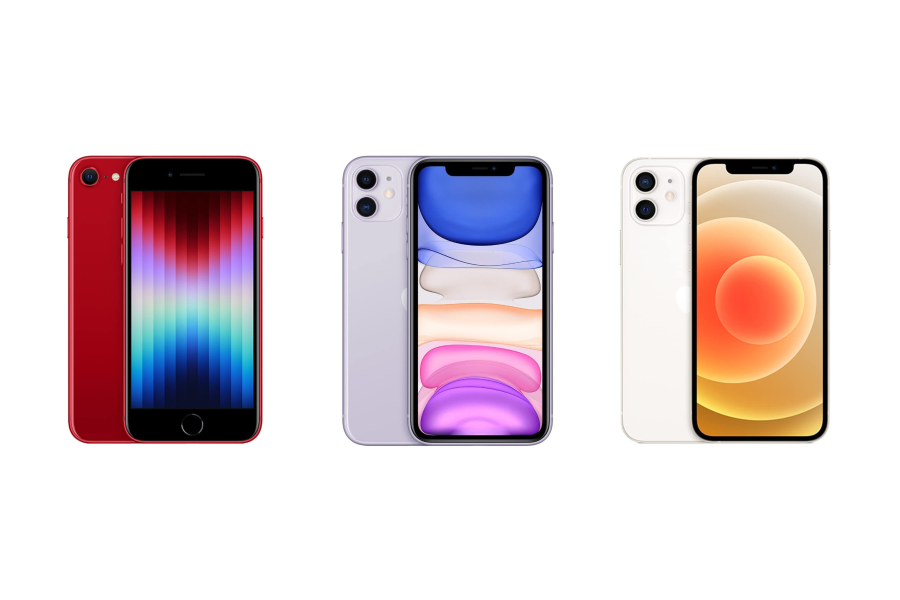
For most buyers in 2026, the oldest iPhones we strongly recommend are:
- iPhone SE 3rd Gen ($120+)
- iPhone 12 ($150+)
Both models still offer:
- iOS 26 support
- Future iOS 27 support for 2027
- Strong everyday performance
- Modern app compatibility
- Reliable long-term usability
💡 Most importantly, they still feel modern enough for everyday use in 2026.
Our Recommendation Summary
| Model |
Recommendation |
Reason |
| iPhone 12 |
✅ Best Overall Choice |
Best balance of price, support, battery life, and modern features |
| iPhone SE 3rd Gen |
✅ Strong Budget Choice |
Excellent performance at a very low price |
| iPhone 12 Mini |
⚠️ Conditional Recommendation |
Great compact phone, but often priced too close to iPhone 12 |
| iPhone 11 |
⚠️ Borderline |
Still usable, but weaker long-term outlook |
| iPhone X / XR / XS |
❌ Not Recommended |
Aging software support and hardware |
| iPhone 6 / 6s / 7 / 8 |
❌ Too Old |
Outdated performance and software support |
What Makes an Old iPhone “Too Old”?
Many older iPhones are still technically usable in 2026.
But usability alone is not the same as being a good purchase.
An old iPhone becomes “too old” when the compromises begin affecting everyday reliability, safety, and long-term usability.
There are five major factors that matter most.
Software Support
Software support is one of the biggest reasons older iPhones eventually stop making sense.
Once an iPhone stops receiving major iOS updates:
- New features stop arriving
- Compatibility issues increase over time
- The phone ages much faster
In 2026, models stuck several iOS versions behind already feel noticeably outdated.
💡 This is one of the main reasons we recommend the iPhone 12 and iPhone SE 3rd Gen. Both still support iOS 26 and will likely support iOS 27 for 2027 as well.
Security Updates
Security support matters even more than feature updates.
Once Apple stops providing security patches:
- Privacy risks increase
- Banking and payment apps become riskier
- Long-term safety declines
For many users, this becomes the real “expiration date” of an iPhone.
💡 A phone may still power on and work, but that does not mean it remains safe for modern everyday use.
App Compatibility
Modern apps increasingly require newer versions of iOS.
As older iPhones fall behind:
- Some apps stop updating
- Some apps stop installing entirely
- Features gradually break
This problem becomes especially noticeable on very old models like:
- iPhone 6
- iPhone 7
- iPhone 8
💡 Even if the hardware still works, software compatibility slowly turns the phone into a frustrating experience.
Performance
Performance aging affects much more than benchmark scores.
Older chips eventually struggle with:
- Modern websites
- Multitasking
- Social media apps
- Gaming
- AI-based photography processing
In 2026, the difference between an A11 chip and an A14/A15 chip is very noticeable in everyday responsiveness.
💡 This is why the iPhone SE 3rd Gen remains such a strong budget option. Its A15 chip is still extremely capable today.
Battery Aging
Battery degradation becomes a serious issue on very old iPhones.
Even if the battery has been replaced, older devices often still suffer from:
- Weaker efficiency
- Poorer thermal performance
- Shorter real-world endurance
Combined with aging hardware, this can make older phones feel unreliable in daily use.
💡 Newer models like the iPhone 12 still deliver much more dependable all-day performance in 2026.
The Oldest iPhones We Still Recommend in 2026
In 2026, only a small number of older iPhones still make strong buying sense.
The goal is not simply finding the cheapest iPhone possible.
The real goal is finding the oldest iPhone that still offers:
- Modern software support
- Reliable performance
- Good long-term usability
- Strong overall value
1. iPhone 12 ($150+) — Best Overall Recommendation
For most buyers, the iPhone 12 is the oldest iPhone that still feels truly modern in 2026.
It introduced several major upgrades that still matter today:
Key Features
- OLED Super Retina XDR display
- 5G connectivity
- A14 Bionic chip
- MagSafe support
- Dual 12MP camera system
- Flat-edge modern design
- iOS 26 support
- Likely iOS 27 support
Specs Overview
| Feature |
iPhone 12 |
| Launch Year |
2020 |
| Chip |
A14 Bionic |
| Display |
6.1" OLED Super Retina XDR |
| 5G Support |
Yes |
| Face ID |
Yes |
| Camera |
Dual 12MP |
| MagSafe |
Yes |
| Software Support |
iOS 26 + likely iOS 27 |
| Starting Refurbished Price (2026) |
$150+ |
Why We Recommend It
The iPhone 12 still delivers a balanced modern smartphone experience in 2026.
More importantly, the pricing is now extremely attractive.
At around $150+, it offers one of the best value-to-performance ratios in Apple’s entire refurbished lineup.
💡 This is why we consider the iPhone 12 the safest “oldest iPhone worth buying” recommendation today.
2. iPhone SE 3rd Gen ($120+) — Best Budget Recommendation
The iPhone SE 3rd Gen is one of the strongest low-cost iPhone options in 2026.
While the design looks older, the internal hardware remains surprisingly modern.
Key Features
- A15 Bionic chip
- Compact and lightweight design
- Touch ID
- 5G support
- Excellent software longevity
- Strong everyday performance
- iOS 26 support
- Likely iOS 27 support
Specs Overview
| Feature |
iPhone SE 3rd Gen |
| Launch Year |
2022 |
| Chip |
A15 Bionic |
| Display |
4.7" LCD Retina |
| 5G Support |
Yes |
| Touch ID |
Yes |
| Camera |
12MP Single Camera |
| Software Support |
iOS 26 + likely iOS 27 |
| Starting Refurbished Price (2026) |
$120+ |
Why We Recommend It
The iPhone SE 3rd Gen delivers surprisingly powerful performance for the price.
Its A15 chip is actually newer and faster than many older flagship iPhones.
💡 If you mainly care about affordability and performance, the iPhone SE 3rd Gen is one of the smartest low-cost iPhone choices available today.
Why We Did Not Recommend the iPhone 12 Mini
The iPhone 12 Mini is still a very good compact iPhone.
However, pricing makes it difficult to recommend broadly in 2026.
Main Problems
- Often priced very close to the standard iPhone 12
- Noticeably weaker battery life
- Smaller display may not suit most users
Since the standard iPhone 12 usually costs around the same price:
- You get better battery life
- A larger display
- Better overall long-term usability
💡 The iPhone 12 Mini only makes strong sense if you specifically want a compact phone.
Why We Did Not Recommend the iPhone 11 Series
The iPhone 11 series still works reasonably well in 2026, but the long-term value proposition is becoming weaker.
Main Limitations
- No 5G support
- Older LCD displays on standard models
- Shorter remaining software lifespan
- Older overall hardware generation
The biggest issue is pricing overlap.
In many promotions:
- iPhone 11 pricing is now very close to iPhone 12 pricing
That makes the iPhone 12 the much smarter long-term buy because it offers:
- 5G
- OLED
- Better long-term support
- More modern hardware
💡 In 2026, the iPhone 11 is still usable, but it no longer feels like the smartest value purchase anymore.
iPhones We No Longer Recommend
Some older iPhones are still technically usable in 2026.
However, usable does not always mean worth buying.
As refurbished prices continue falling on newer models like the iPhone SE 3rd Gen and iPhone 12, many older iPhones simply no longer make financial sense.
In most cases, spending slightly more gets you:
- Longer software support
- Better performance
- Improved battery life
- Modern connectivity features
- Better long-term value
iPhone X / XR / XS Series
The iPhone X generation represented a major design shift for Apple, introducing:
- Face ID
- Edge-to-edge displays
- Gesture navigation
However, in 2026, these models are becoming increasingly difficult to recommend.
Main Problems
- Aging software support timeline
- Older A11/A12 processors
- No 5G support
- Weaker long-term app compatibility outlook
- Battery aging issues
More importantly, pricing overlap hurts them badly.
In many cases, refurbished iPhone XR or XS pricing is not dramatically cheaper than newer models like:
- iPhone SE 3rd Gen
- iPhone 12
💡 Once pricing gets close, it becomes much smarter to choose newer hardware with longer support.
iPhone 6 / 6s / 7 / 8 Series
These iPhones are now simply too old for most buyers in 2026.
Main Limitations
- Outdated software support
- Weak long-term app compatibility
- Aging battery performance
- Older cameras
- Slower real-world responsiveness
- No modern features like 5G or MagSafe
While these devices may still handle:
- Phone calls
- Texting
- Basic browsing
…the overall experience increasingly feels outdated in modern daily use.
The Biggest Problem: Software Support
The biggest issue is software longevity.
Many of these models:
- No longer receive major iOS updates
- Receive limited or no security support
- Already experience app compatibility problems
💡 This is especially important for banking apps, social media apps, and modern productivity tools.
Why Spending Slightly More Matters
In 2026, the refurbished iPhone market has changed significantly.
For only a relatively small price increase, buyers can move from:
- Outdated hardware
- Weak software support
- Older connectivity standards
…to much more modern devices like the iPhone SE 3rd Gen or iPhone 12.
For example:
- iPhone SE 3rd Gen starts around $120+
- iPhone 12 starts around $150+
At those prices, older models like the iPhone 7, iPhone 8, XR, or XS simply no longer provide strong long-term value.
Bottom Line
💡 In 2026, many older iPhones are still technically functional—but only a few remain smart purchases.
For most buyers, it makes far more sense to spend slightly more on newer models with stronger software support, better performance, and better long-term usability.
Conclusion — What Is the Oldest iPhone You Should Buy in 2026?
In 2026, the answer is no longer just about whether an iPhone still works.
The real question is whether it still delivers:
- Reliable software support
- Strong app compatibility
- Modern everyday performance
- Good long-term value
For most buyers, the oldest iPhones we confidently recommend are:
These models still offer modern enough hardware and software support to remain practical for years to come.
More importantly, refurbished pricing has changed dramatically.
Because newer iPhones have become much more affordable, older models like:
- iPhone X
- iPhone XR
- iPhone XS
- iPhone 6 / 7 / 8
…simply no longer make strong long-term buying sense for most people.
💡 In many cases, spending only slightly more gets you dramatically better software longevity, performance, battery life, and overall usability.
Final Recommendation
- 💰 Want the cheapest modern iPhone? Choose the iPhone SE 3rd Gen
- ⚖️ Want the best overall balance? The iPhone 12 is the sweet spot
- 📱 Want a compact iPhone? Consider the iPhone 12 Mini, but only if pricing is reasonable
- 🚫 Avoid going too old just to save a small amount of money
💡 In 2026, the iPhone 12 generation represents the point where older iPhones still feel modern enough to confidently recommend.
FAQ — Oldest iPhones Worth Buying in 2026
1. What is the oldest iPhone still worth buying in 2026?
For most buyers, the oldest iPhone we strongly recommend is Certified Used / Refurbished iPhone 12 (starting at $150+). It still supports iOS 26, likely supports iOS 27, and offers modern features like 5G and OLED display technology. If you want to get the best value, you may consider Certified Used / Refurbished iPhone SE 3rd Gen (Starting at $120+).
2. Is the iPhone 11 still worth buying in 2026?
The iPhone 11 is still usable, but it is becoming a weaker long-term purchase. Since iPhone 12 pricing is now often very close to iPhone 11 pricing, the iPhone 12 usually offers much better overall value.
3. Is the iPhone XR too old in 2026?
For most buyers, yes. The iPhone XR is becoming difficult to recommend because of aging software support, lack of 5G, and older hardware compared to newer low-cost options.
4. Is the iPhone 8 still usable in 2026?
Technically yes, but it is no longer a strong recommendation. App compatibility, software support, battery aging, and overall performance limitations make it increasingly outdated for modern daily use.
5. Why is the iPhone 12 such a strong value in 2026?
The iPhone 12 introduced several important modern features including OLED display, 5G, MagSafe, and the A14 Bionic chip. At around $150+ refurbished, it delivers excellent long-term value.
6. Is the iPhone SE 3rd Gen worth buying in 2026?
Yes. The iPhone SE 3rd Gen is one of the best low-cost iPhones available thanks to its A15 chip, strong software support, and affordable pricing around $120+.
7. Why is the iPhone 12 Mini not strongly recommended?
The iPhone 12 Mini is still a good compact phone, but it is often priced very close to the standard iPhone 12. Since the standard iPhone 12 offers better battery life and a larger display, it is usually the better overall value.
8. What makes an old iPhone “too old”?
The biggest factors include software support, security updates, app compatibility, battery aging, and overall performance. Once those areas begin declining significantly, the phone becomes difficult to recommend long-term.
9. Should I buy the cheapest iPhone possible?
Usually no. In many cases, spending slightly more money gets you dramatically better software longevity, performance, battery life, and overall usability.
10. How many more years will the iPhone 12 be usable?
The iPhone 12 will likely remain comfortably usable through at least 2027–2028 thanks to continued software support and strong overall hardware performance.
 United States
 Sale
Sale
 United Kingdom
 Canada