Introduction
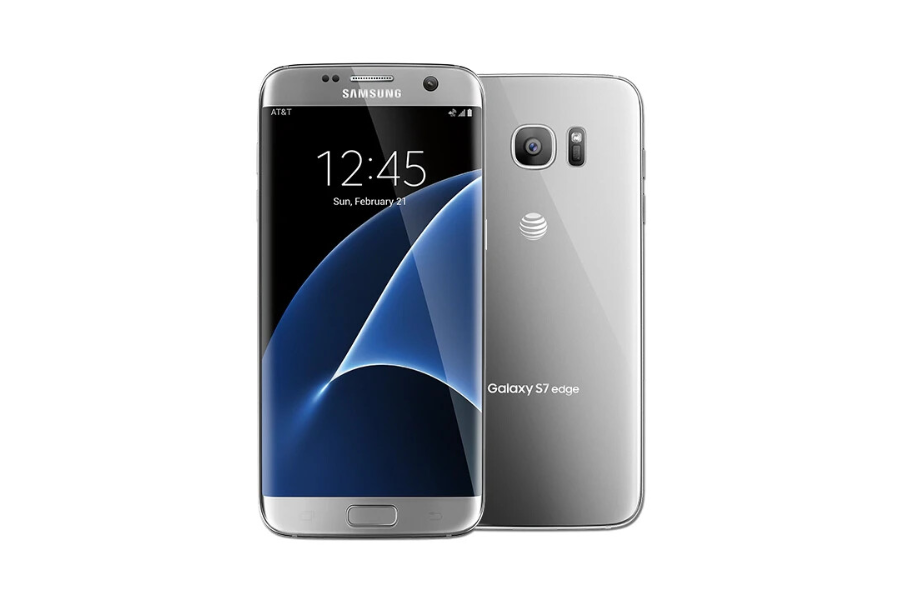
The Samsung Galaxy S7 Edge was one of the most distinctive Galaxy phones of its generation. Its curved 5.5-inch Super AMOLED display, premium glass design, strong camera, wireless charging, and water resistance helped make it a flagship favorite when it launched in 2016.
But that was 10 years ago. In 2026, the Galaxy S7 Edge has largely disappeared from the Certified Used and Refurbished market. According to the UpTrade Price Tracker, there is currently no Certified Used or Refurbished Galaxy S7 Edge stock.
Quick Verdict
| Category |
Galaxy S7 Edge |
| Overall Recommendation |
❌ Not Recommended |
| Certified Used / Refurbished Inventory (2026) |
No Stock |
| Samsung Software Support |
Ended Years Ago |
| Security Updates |
Ended Years Ago |
| One UI 9 (Android 17) |
Not Supported |
| Screen Size |
5.5-inch |
| Best Alternative |
Galaxy S23 — 6.1-inch, $210+ |
| Larger-Screen Alternative |
Galaxy S23 FE — 6.4-inch, $210+ |
Our verdict is straightforward: don't buy a Galaxy S7 Edge in 2026.
According to the UpTrade Price Tracker, there is currently no Certified Used or Refurbished stock for the Galaxy S7 Edge. You may still see individual devices listed on open marketplaces, but we don't recommend going out of your way to buy a 10-year-old smartphone.
Samsung ended software and security support for the Galaxy S7 Edge years ago. It doesn't support One UI 9 (Android 17) and has gone many years without regular Samsung security patches. At this age, battery degradation, previous repairs, replacement components, screen condition, and general hardware reliability are also important concerns.
If you want to learn more about Samsung's software support lifecycle and older Galaxy phones that have reached the end of support, read our What Samsung Galaxy Will Stop Working guide.
Instead, we recommend the Galaxy S23 or Galaxy S23 FE. Both start at around $210+ for Certified Used and Refurbished models and support One UI 9 (Android 17).
The Galaxy S23 is our preferred overall replacement. Its 6.1-inch display is significantly larger than the S7 Edge's 5.5-inch screen, despite the S23 being Samsung's standard model. You also get much faster performance, 5G, a 120Hz AMOLED display, substantially newer cameras, ongoing security support, and Galaxy AI.
If you want an even larger display, consider the Galaxy S23 FE. It also starts at around $210+ but gives you a 6.4-inch screen and a larger 4,500mAh battery.
If you're still using a Galaxy S7 Edge, we also recommend upgrading in 2026. The phone has been without official Samsung security support for many years. With much newer Certified Used and Refurbished Galaxy S23 and S23 FE models now available around $210+, this is a good time to move to a supported Galaxy phone.
Samsung Galaxy S7 Edge in 2026
The Galaxy S7 Edge is now a 10-year-old smartphone. When Samsung released it in 2016, it was one of the company's most advanced phones, with a curved 5.5-inch Super AMOLED display, premium glass-and-metal construction, wireless charging, expandable storage, and IP68 water and dust resistance.
Some of those features still sound impressive today. However, the Galaxy S7 Edge has reached an age where software support, security, battery condition, app compatibility, and overall hardware reliability matter much more than its original flagship specifications.
Price and Availability
According to the UpTrade Price Tracker, there is currently no Certified Used or Refurbished Galaxy S7 Edge stock in 2026.
That's understandable for a phone released 10 years ago. As smartphones get older, fewer devices remain in good enough condition to be professionally refurbished and sold through Certified Used or Refurbished channels.
You may still find a Galaxy S7 Edge through an open marketplace or private seller. However, we don't recommend buying one simply because the asking price looks cheap. With a device this old, battery health, screen condition, previous repairs, replacement components, water damage, and overall reliability can vary significantly.
Instead, we recommend putting your money toward a much newer Certified Used or Refurbished Galaxy phone. The Galaxy S23 and Galaxy S23 FE both start at around $210+ according to the UpTrade Price Tracker.
Software Support
Software support is one of the biggest reasons we don't recommend the Galaxy S7 Edge in 2026. Samsung ended official support for the model years ago.
The Galaxy S7 Edge originally launched with Android 6 and received major Android upgrades through Android 8. By comparison, newer supported Samsung phones now run One UI 9 (Android 17).
That means the Galaxy S7 Edge is approximately nine major Android generations behind current Samsung software. It also no longer receives Samsung security updates.
If you want more information about Samsung's software support lifecycle and older Galaxy phones that have reached the end of support, read our What Samsung Galaxy Will Stop Working guide.
Chipset and Performance
The U.S. Galaxy S7 Edge uses the Snapdragon 820, while many international versions use Samsung's Exynos 8890. These were flagship processors in 2016, but smartphone performance has advanced dramatically over the past decade.
An S7 Edge can still perform some basic tasks, but modern apps, websites, and operating systems are much more demanding than they were when the phone was released. Its 4GB of RAM and decade-old processor can also make multitasking and newer apps feel considerably slower than on a modern Galaxy phone.
The Galaxy S23 uses the Snapdragon 8 Gen 2 for Galaxy, while the Galaxy S23 FE also uses much newer flagship-class hardware. Either represents an enormous improvement in CPU performance, graphics, power efficiency, image processing, connectivity, and AI capabilities.
For anyone upgrading directly from an S7 Edge, the performance difference should be immediately noticeable.
Display
The Galaxy S7 Edge's display was one of its defining features. Its 5.5-inch Super AMOLED screen has a sharp 2560 × 1440 resolution and curved edges that helped distinguish the phone from competing flagships of its generation.
The display can still look sharp, but it runs at 60Hz. Both the Galaxy S23 and Galaxy S23 FE offer modern AMOLED displays with refresh rates up to 120Hz, making scrolling, animations, navigation, and supported games feel much smoother.
Screen size has also changed dramatically. The S7 Edge was considered a large-screen phone in 2016 at 5.5 inches. Today, the standard Galaxy S23 has a 6.1-inch display, while the Galaxy S23 FE has a 6.4-inch display.
In other words, you don't need a Plus or Ultra model to get a significantly larger screen than the old Galaxy S7 Edge.
Camera
The Galaxy S7 Edge has a 12MP rear camera with optical image stabilization. Its camera was highly competitive when the phone launched and helped establish Samsung's reputation for strong smartphone photography.
However, camera technology has advanced substantially over the past 10 years. The Galaxy S23 features a 50MP main camera, 12MP ultra-wide camera, and 10MP telephoto camera with 3x optical zoom.
The Galaxy S23 FE also has a versatile triple-camera system with a 50MP main camera, 12MP ultra-wide camera, and 8MP telephoto camera with 3x optical zoom.
Newer Galaxy phones also benefit from many generations of improvements to Samsung's image processing, HDR, low-light photography, stabilization, autofocus, portraits, zoom, and video recording.
Either S23 model is a massive camera upgrade from the Galaxy S7 Edge.
Battery Life
The Galaxy S7 Edge has a 3,600mAh battery, which was relatively large when the phone launched. It also supports wired fast charging and wireless charging.
However, battery age is a major concern with any 10-year-old smartphone. Lithium-ion batteries naturally degrade over time, and an original S7 Edge battery would be far beyond the age at which we would expect it to retain its original capacity.
Some S7 Edge devices may have received replacement batteries over the years, but the quality, age, and condition of those batteries can vary significantly.
The Galaxy S23 has a 3,900mAh battery combined with a dramatically more efficient processor. The Galaxy S23 FE has an even larger 4,500mAh battery.
If battery life is especially important, the Galaxy S23 FE is an attractive upgrade.
Design
The Galaxy S7 Edge still has a distinctive design. Its curved glass edges, glass back, metal frame, and physical Home button make it immediately recognizable as a Samsung flagship from its era.
It also includes features that some users may miss on newer Galaxy phones, including a 3.5mm headphone jack and microSD expandable storage.
However, newer Galaxy phones make much more efficient use of their front surface. The S23 generation uses very small bezels and a compact camera cutout, allowing Samsung to fit substantially larger displays into relatively compact phones.
That's why the standard Galaxy S23 can have a 6.1-inch display—0.6 inch larger than the old S7 Edge—without being a Plus model.
Why We Don't Recommend the Galaxy S7 Edge in 2026
The Galaxy S7 Edge was an important Samsung flagship, but 10 years is an extremely long lifespan for a smartphone. By 2026, we believe it has aged well beyond the point where consumers should actively shop for one.
The lack of Certified Used or Refurbished inventory is only one warning sign. Samsung support ended years ago, Android 8 is extremely outdated, security patches have stopped, and the age of the hardware creates additional reliability concerns.
No Certified Used or Refurbished Inventory
According to the UpTrade Price Tracker, there is currently no Certified Used or Refurbished Galaxy S7 Edge stock in 2026.
This doesn't necessarily mean there are no S7 Edge phones for sale anywhere. Individual devices may still appear through open marketplaces, local listings, or private sellers.
However, the disappearance of Certified Used and Refurbished inventory is itself useful information for shoppers. The model has reached an age where finding professionally refurbished inventory from established sellers becomes increasingly difficult.
Rather than searching the open market for an S7 Edge, we recommend putting your budget toward a newer Certified Used or Refurbished phone.
Samsung Support Ended Years Ago
The Galaxy S7 Edge has been outside Samsung's official support lifecycle for years. It no longer receives major Android OS upgrades or regular Samsung security updates.
That's particularly important because the S7 Edge hasn't just recently reached end of support. It has already spent many years without regular security patches.
A phone doesn't suddenly stop working when software support ends, but the security gap can grow over time as new vulnerabilities are discovered and the unsupported device no longer receives fixes.
For a phone you're buying in 2026, we strongly recommend choosing a model that still receives official security updates.
Its Android Version Is Extremely Outdated
The Galaxy S7 Edge is limited to Android 8, while current supported Samsung phones have moved to One UI 9 (Android 17).
That's an enormous software gap. Beyond missing newer Samsung features, the S7 Edge also misses years of improvements to Android security, privacy, permissions, notifications, accessibility, battery management, and general usability.
App compatibility is another concern. As developers increase the minimum Android versions required by their apps, an Android 8 device can gradually lose access to newer versions of apps and services.
For occasional basic use, an S7 Edge may still function. But as a primary smartphone you're purchasing in 2026, Android 8 is simply too old for us to recommend.
A 10-Year-Old Battery and Hardware Are a Concern
Software isn't the only issue. Any Galaxy S7 Edge available today is based on hardware originally released in 2016.
Over 10 years, smartphones can experience battery degradation, display wear, charging-port problems, button wear, water exposure, and other age-related issues. Devices may also have undergone one or more repairs.
A replacement battery or screen isn't automatically a problem, but the quality of replacement parts and repairs can vary significantly—especially when buying from an unknown private seller.
This makes the condition and history of an S7 Edge particularly important, and it's another reason we wouldn't recommend chasing a cheap open-market listing.
Don't Buy One From the Open Market Just Because It's Cheap
You may find a Galaxy S7 Edge at a very low price through an open marketplace. That can make the phone look like a bargain, but we recommend looking beyond the initial purchase price.
With a 10-year-old phone, you may not know the complete history of the device. Battery condition, previous repairs, water exposure, replacement screens, charging problems, carrier status, and other issues may not always be obvious from a listing.
More importantly, even a perfectly functioning Galaxy S7 Edge is still an unsupported Android 8 phone.
Instead of buying an extremely old phone simply because it's inexpensive, we recommend spending more upfront on a much newer Certified Used or Refurbished Galaxy model that still receives official software support.
Should You Upgrade If You Already Own a Galaxy S7 Edge?
Yes. We recommend upgrading from the Galaxy S7 Edge in 2026.
The S7 Edge has been without regular Samsung security updates for years, is limited to Android 8, and is now based on 10-year-old hardware. Continuing to rely on it as a primary smartphone can create increasing security, compatibility, battery, and reliability concerns.
The good news is that you don't need to buy an expensive new flagship. Certified Used and Refurbished Galaxy S23 and Galaxy S23 FE models both start at around $210+.
Both give you One UI 9 (Android 17), ongoing security updates, 5G, 120Hz AMOLED displays, much newer cameras, dramatically faster performance, and Galaxy AI.
You'll also get a bigger screen. The standard Galaxy S23 has a 6.1-inch display, compared with 5.5 inches on the S7 Edge. The Galaxy S23 FE goes even larger at 6.4 inches.
If you're still using a Galaxy S7 Edge in 2026, we believe this is a very good time to upgrade.
Best Alternative: Galaxy S23
If you're considering replacing a Galaxy S7 Edge, the Galaxy S23 is our top recommendation for 2026. According to the UpTrade Price Tracker, Certified Used and Refurbished Galaxy S23 models start at around $210+.
The Galaxy S23 is a major upgrade in almost every area. It supports the latest One UI 9 (Android 17), continues to receive Samsung security updates, and gives you much faster Snapdragon 8 Gen 2 for Galaxy performance, 5G, a 120Hz AMOLED display, significantly newer cameras, better battery efficiency, and Galaxy AI.
It also gives you considerably more screen space. The Galaxy S7 Edge's 5.5-inch display was considered large when it launched in 2016. The standard Galaxy S23 has a 6.1-inch display—0.6 inch larger—even though it isn't a Plus or Ultra model.
At around $210+, we think the Galaxy S23 is an excellent upgrade for someone moving from an older Galaxy phone.
Galaxy S7 Edge vs Galaxy S23 Specs Comparison
| Feature |
Galaxy S7 Edge |
Galaxy S23 |
| Release Year |
2016 |
2023 |
| Certified Used / Refurbished Price (2026) |
No Stock |
$210+ |
| Latest Supported Android |
Android 8 |
Android 17 |
| One UI 9 (Android 17) |
Not Supported |
Supported |
| Software Support |
Ended |
Still Supported |
| Security Updates |
Ended |
Through 2028 |
| Chipset |
Snapdragon 820 / Exynos 8890 |
Snapdragon 8 Gen 2 for Galaxy |
| RAM |
4GB |
8GB |
| Storage |
32GB / 64GB / 128GB |
128GB / 256GB |
| microSD Card |
Yes |
No |
| Display Technology |
Super AMOLED |
Dynamic AMOLED 2X |
| Display Size |
5.5-inch |
6.1-inch |
| Resolution |
2560 × 1440 |
2340 × 1080 |
| Refresh Rate |
60Hz |
Up to 120Hz |
| Main Camera |
12MP |
50MP |
| Ultra-wide Camera |
No |
12MP |
| Telephoto Camera |
No |
10MP, 3x Optical Zoom |
| Front Camera |
5MP |
12MP |
| Video Recording |
Up to 4K |
Up to 8K |
| Battery Capacity |
3,600mAh |
3,900mAh |
| Wired Charging |
15W |
25W |
| Wireless Charging |
Yes |
Yes |
| Water and Dust Resistance |
IP68 |
IP68 |
| 5G |
No |
Yes |
| Wi-Fi |
Wi-Fi 5 |
Wi-Fi 6E |
| Bluetooth |
4.2 |
5.3 |
| Headphone Jack |
Yes |
No |
| Galaxy AI |
No |
Yes |
Key Differences
Price and Availability
The Galaxy S7 Edge has aged out of the Certified Used and Refurbished market tracked by UpTrade. In 2026, we currently see no Certified Used or Refurbished stock for the model.
You may find an S7 Edge on the open market, but we don't recommend choosing a 10-year-old unsupported phone simply because the asking price is low.
Certified Used and Refurbished Galaxy S23 models start at around $210+. At this price, you're getting a much newer phone that still has official Samsung support, making it the much smarter place to put your money.
Software Support
The software gap between these phones is enormous. The Galaxy S7 Edge is limited to Android 8, while the Galaxy S23 supports One UI 9 (Android 17).
Samsung also ended security support for the Galaxy S7 Edge years ago. The Galaxy S23 continues to receive security updates through 2028.
For a phone you're buying and potentially keeping for several years, the Galaxy S23 is clearly the better choice.
Performance
The Galaxy S7 Edge was a flagship in 2016, but a decade of processor development separates it from the Galaxy S23.
The Galaxy S23's Snapdragon 8 Gen 2 for Galaxy provides dramatically faster CPU and graphics performance, better power efficiency, newer image processing, stronger AI capabilities, and support for modern connectivity.
If you're upgrading directly from an S7 Edge, even ordinary tasks such as opening apps, browsing the web, switching between apps, taking photos, and navigating the interface should feel significantly faster.
Display and Screen Size
The Galaxy S7 Edge's 5.5-inch QHD Super AMOLED display was one of the best smartphone screens of its generation. Interestingly, it actually has a higher pixel resolution than the Galaxy S23.
However, the S23's newer Dynamic AMOLED 2X display supports up to a 120Hz refresh rate, compared with 60Hz on the S7 Edge. That makes everyday scrolling and animations feel noticeably smoother.
The S23 is also considerably larger in screen size at 6.1 inches. What's remarkable is that this is now Samsung's standard Galaxy S model—not a Plus model.
For an S7 Edge owner, moving to the standard S23 gives you significantly more screen space without requiring you to buy one of Samsung's largest phones.
Camera
The Galaxy S7 Edge has a single 12MP rear camera. It was excellent for its time, but the Galaxy S23 provides a much more versatile triple-camera system.
The S23 has a 50MP main camera, 12MP ultra-wide camera, and 10MP telephoto camera with 3x optical zoom. That gives you dedicated options for wide landscapes, standard photography, portraits, and optical zoom.
Samsung's image processing has also improved dramatically since 2016, particularly for low-light photography, HDR, stabilization, autofocus, portraits, and video.
Battery Life
The Galaxy S7 Edge has a 3,600mAh battery, while the Galaxy S23 has a slightly larger 3,900mAh battery.
However, battery capacity alone doesn't tell the full story. The S23's processor is much more power efficient, and any S7 Edge battery or replacement battery available in 2026 deserves careful scrutiny because of the age of the device.
For everyday reliability and efficiency, we strongly favor the Galaxy S23.
5G and Connectivity
The Galaxy S7 Edge predates 5G smartphones and supports 4G LTE. The Galaxy S23 supports 5G, along with much newer Wi-Fi and Bluetooth standards.
If you're buying a phone that you plan to keep for several years, the S23's newer connectivity makes it a much more future-friendly option.
Galaxy AI
The Galaxy S23 supports Galaxy AI, while the Galaxy S7 Edge does not.
Galaxy AI provides newer Samsung tools for search, translation, communication, productivity, and photo editing. These features aren't essential for every buyer, but they're another example of how much the Galaxy experience has evolved over the past decade.
Which One Should You Buy?
There really isn't a close comparison in 2026. Choose the Galaxy S23.
The Galaxy S7 Edge has no Certified Used or Refurbished stock tracked by UpTrade, is limited to Android 8, hasn't received Samsung security updates for years, and is based on 10-year-old hardware.
The Galaxy S23 starts at around $210+ and gives you One UI 9 (Android 17), ongoing security support, Snapdragon 8 Gen 2 for Galaxy performance, a larger 6.1-inch 120Hz AMOLED display, 5G, dramatically newer cameras, and Galaxy AI.
If you're moving from a Galaxy S7 Edge, the S23 is our recommended overall upgrade.
Another Great Option: Galaxy S23 FE
The Galaxy S23 FE is another great choice for Galaxy S7 Edge owners, particularly if you want a larger display.
According to the UpTrade Price Tracker, Certified Used and Refurbished Galaxy S23 FE models also start at around $210+ in 2026. That puts the S23 FE at approximately the same starting price as the standard Galaxy S23.
The S23 FE has a 6.4-inch Dynamic AMOLED 2X display, which is considerably larger than the S7 Edge's 5.5-inch screen. You also get a smooth 120Hz refresh rate.
It supports One UI 9 (Android 17) and continues to receive Samsung security updates. Other major upgrades include 5G, a 50MP main camera, 3x optical zoom, a 4,500mAh battery, wireless charging, IP68 water and dust resistance, and Galaxy AI.
Why the Galaxy S23 FE Is Good for Large-Screen Buyers
When the Galaxy S7 Edge launched, its 5.5-inch display was considered large. Smartphone screen sizes have changed dramatically since then.
The Galaxy S23 FE has a 6.4-inch display—almost a full inch larger diagonally than the S7 Edge.
This makes the S23 FE a particularly good choice if you originally bought the S7 Edge because you preferred a larger screen for videos, photos, reading, web browsing, or games.
You also get a larger 4,500mAh battery, which may appeal to buyers who prioritize battery capacity alongside screen size.
Galaxy S23 or Galaxy S23 FE?
With both phones starting at around $210+, your choice largely comes down to what you value most.
Choose the Galaxy S23 if you want our best overall recommendation. Its Snapdragon 8 Gen 2 for Galaxy processor offers excellent performance and efficiency, and its 6.1-inch display is already significantly larger than the S7 Edge's 5.5-inch screen.
Choose the Galaxy S23 FE if you prioritize screen size and battery capacity. Its 6.4-inch display and 4,500mAh battery make it a compelling option for buyers who prefer a larger phone.
Either is an enormous upgrade over the Galaxy S7 Edge and, at around $210+, both are excellent Certified Used or Refurbished options for 2026.
How Much Bigger Are Modern Galaxy Screens?
The Galaxy S7 Edge is a good example of how dramatically smartphone screen sizes and designs have changed over the past decade.
| Model |
Screen Size |
| Galaxy S7 Edge |
5.5-inch |
| Galaxy S23 |
6.1-inch |
| Galaxy S23 FE |
6.4-inch |
In 2016, the 5.5-inch Galaxy S7 Edge was Samsung's large-screen flagship option. In 2026, even the standard Galaxy S23 gives you a significantly larger 6.1-inch display.
The Galaxy S23 FE goes further with a 6.4-inch display. That's 0.9 inch larger diagonally than the S7 Edge.
Much of this change is possible because newer Galaxy phones use the front of the device more efficiently. The S7 Edge has larger bezels and a physical Home button below the display. Newer Galaxy phones use thin bezels and small camera cutouts, allowing the screen to occupy much more of the phone's front surface.
For Galaxy S7 Edge owners, that means you have plenty of choices. The standard Galaxy S23 already provides a noticeably larger screen, while the Galaxy S23 FE is an excellent choice if you want an even bigger display.
Conclusion
The Samsung Galaxy S7 Edge was an excellent flagship in its time, but we don't recommend buying one in 2026. According to the UpTrade Price Tracker, there is currently no Certified Used or Refurbished Galaxy S7 Edge stock, which isn't surprising for a phone originally released in 2016.
You may still find a Galaxy S7 Edge through an open marketplace or private seller, but a low price doesn't necessarily make it a good deal. Samsung ended software and security support for the S7 Edge years ago, and the phone is limited to Android 8. At 10 years old, battery health, previous repairs, replacement parts, and overall reliability are also major concerns.
Instead, our top recommendation is the Galaxy S23. Certified Used and Refurbished models start at around $210+ and support the latest One UI 9 (Android 17). You also get ongoing security updates, Snapdragon 8 Gen 2 for Galaxy performance, 5G, a 120Hz AMOLED display, much newer cameras, and Galaxy AI.
The screen-size difference may surprise longtime S7 Edge owners. The Galaxy S7 Edge was considered a large-screen phone with its 5.5-inch display, but today's standard Galaxy S23 has a considerably larger 6.1-inch display. You no longer need to buy a Plus model just to get a bigger screen than the old S7 Edge.
If you prefer an even larger display, the Galaxy S23 FE is another excellent option. It also starts at around $210+ and gives you a larger 6.4-inch display and 4,500mAh battery, along with One UI 9 (Android 17), ongoing security updates, 5G, a 120Hz AMOLED display, and Galaxy AI.
If you already own a Galaxy S7 Edge, we recommend upgrading in 2026. The phone has been without Samsung security updates for years, and continuing to rely on such an old and unsupported device creates increasing security, compatibility, battery, and reliability concerns. With much newer Certified Used and Refurbished Galaxy phones available from around $210+, this is a good time to upgrade.
For most buyers, we recommend the Galaxy S23 as the best overall replacement. If you want a larger screen and battery, choose the Galaxy S23 FE. Either is a much smarter choice than searching the open market for an aging Galaxy S7 Edge in 2026.
Frequently Asked Questions
1. Is the Samsung Galaxy S7 Edge still worth buying in 2026?
No. We don't recommend buying the Galaxy S7 Edge in 2026. UpTrade currently sees no Certified Used or Refurbished stock for the model, Samsung ended software and security support years ago, and the phone is limited to Android 8. The Galaxy S23 and Galaxy S23 FE are much better options.
2. How much does a Certified Used Galaxy S7 Edge cost in 2026?
According to the UpTrade Price Tracker, there is currently no Certified Used or Refurbished Galaxy S7 Edge stock in 2026. You may still find one through an open marketplace or private seller, but we don't recommend buying a 10-year-old unsupported phone.
3. Why is it difficult to find a Certified Used or Refurbished Galaxy S7 Edge?
The Galaxy S7 Edge was released in 2016, so fewer devices remain suitable for the Certified Used and Refurbished market. Battery condition, screen wear, previous repairs, replacement parts, and overall device condition can also make quality inventory harder to find as a phone gets older.
4. What is the latest Android version for the Galaxy S7 Edge?
The Galaxy S7 Edge is limited to Android 8. It does not support the latest One UI 9 (Android 17), putting it many Android generations behind current Samsung phones.
5. Does the Galaxy S7 Edge support One UI 9 (Android 17)?
No. The Galaxy S7 Edge does not support One UI 9 (Android 17). Samsung ended major Android OS upgrades for the Galaxy S7 Edge years ago.
6. Does the Galaxy S7 Edge still receive security updates in 2026?
No. Samsung ended security updates for the Galaxy S7 Edge years ago. The lack of ongoing security patches is one of the main reasons we don't recommend buying or continuing to rely on the Galaxy S7 Edge in 2026.
7. Is the Galaxy S7 Edge safe to use in 2026?
The Galaxy S7 Edge may still work, but it has been without regular Samsung security updates for years. That creates increasing security concerns as newly discovered vulnerabilities go unpatched. We recommend upgrading to a newer supported Galaxy phone in 2026.
8. Should I upgrade if I already own a Galaxy S7 Edge?
Yes. We recommend upgrading from the Galaxy S7 Edge in 2026. The phone is limited to Android 8, has been without regular Samsung security updates for years, and is based on 10-year-old hardware. Much newer Certified Used and Refurbished Galaxy S23 and Galaxy S23 FE models start at around $210+.
9. Is it worth buying a cheap Galaxy S7 Edge from an open marketplace?
We don't recommend it. Even if you find a Galaxy S7 Edge at a very low price, you're buying a 10-year-old unsupported phone. Battery health, previous repairs, replacement parts, water damage, and overall condition can also be difficult to evaluate when buying from an open marketplace or private seller.
10. Is the Galaxy S23 a good replacement for the Galaxy S7 Edge?
Yes. The Galaxy S23 is our top replacement for the Galaxy S7 Edge. Certified Used and Refurbished models start at around $210+ and provide One UI 9 (Android 17), ongoing security updates, 5G, a 120Hz AMOLED display, much faster performance, newer cameras, and Galaxy AI.
11. Is the Galaxy S23 screen bigger than the Galaxy S7 Edge?
Yes. The Galaxy S7 Edge has a 5.5-inch display, while the standard Galaxy S23 has a 6.1-inch display. That means even Samsung's standard Galaxy S model now gives you a considerably larger screen than the old Galaxy S7 Edge.
12. Is the Galaxy S23 FE a good replacement for the Galaxy S7 Edge?
Yes. The Galaxy S23 FE is a great alternative if you prefer a larger screen. It has a 6.4-inch display and a 4,500mAh battery, supports One UI 9 (Android 17), and continues to receive Samsung security updates. Certified Used and Refurbished models start at around $210+.
13. Which is better for a Galaxy S7 Edge upgrade, the Galaxy S23 or Galaxy S23 FE?
We recommend the Galaxy S23 for most buyers because of its Snapdragon 8 Gen 2 for Galaxy processor, strong efficiency, compact design, and excellent overall performance. If you prioritize screen size and battery capacity, the Galaxy S23 FE is a great alternative with a larger 6.4-inch display and 4,500mAh battery. Both start at around $210+ for Certified Used and Refurbished models.
14. What is the best alternative to the Galaxy S7 Edge in 2026?
We recommend the Galaxy S23 as the best overall alternative. It starts at around $210+ and gives you a 6.1-inch display, One UI 9 (Android 17), ongoing security updates, 5G, and much newer hardware. If you want a larger 6.4-inch display and bigger battery, the Galaxy S23 FE is another excellent option at around the same starting price.

 Sale
Sale