Introduction
As we start 2026, many Samsung Galaxy users are curious about the longevity of their devices, particularly regarding software support. Samsung’s Galaxy lineup includes several series, but this article will focus on the most popular S Series and Note Series, which are known for their flagship features.
Clarification
Let’s clear up a common misconception: no Samsung Galaxy phone will suddenly stop working in 2026. Your device will continue to function even if it no longer receives software updates. However, Samsung plans to discontinue software support for some older models, meaning they will no longer receive Android OS updates or security patches.
This lack of support can pose potential risks, such as security vulnerabilities or compatibility issues with newer apps. If you own an older Galaxy model, now is the time to understand what this means for you.
Understanding Samsung Android OS Updates
Samsung categorizes its Android OS updates into two main types based on the device's age and series: Monthly Updates and Quarterly Updates. There was Bi-Annual Updates category in the past but has been removed by Samsung in 2026.
Each type of update serves a specific purpose and ensures varying levels of device functionality and security. Devices in the Monthly Updates category will be upgraded to the latest Android OS version and receive security updates. Devices in the Quarterly Updates category will receive only security updates.
7 Years Commitment
As of Jan 2024, Samsung has committed to providing 7 years of Software Support for its flagship Galaxy smartphones, which is a major step forward for long-term device safety and usability. This commitment helps ensure your Galaxy phone continues to receive the latest Android OS with new features and security updates that protect against vulnerabilities well beyond the typical upgrade cycle. For example, Galaxy S24, launched in 2024, will continue to receive the latest Android OS (One UI) and security updates until 2031.
Monthly Updates (Android Upgrade + Security Update)
Devices Covered
Recent flagship models launched since 2023, such as Galaxy S23, S24, and S25 series.
Important Change: Since early 2026, Samsung has removed the Galaxy S22 series from the monthly update coverage.
- Galaxy S26, Galaxy S26+, Galaxy S26 Ultra
- Galaxy S25, Galaxy S25+, Galaxy S25 Ultra, Galaxy S25 Edge, Galaxy S25 FE
- Galaxy S24, Galaxy S24+, Galaxy S24 Ultra, Galaxy S24 FE
- Galaxy S23, Galaxy S23+, Galaxy S23 Ultra, Galaxy S23 FE
- Galaxy Z TriFold
- Galaxy Z Fold4, Galaxy Z Fold5, Galaxy Z Fold6, Galaxy Z Fold7, Galaxy Z Fold Special Edition
- Galaxy Z Flip4, Galaxy Z Flip5, Galaxy Z Flip6, Galaxy Z Flip7, Galaxy Z Flip7 FE
- W23, W23 Flip, W24, W24 Flip, W25, W25 Flip, W26
- Galaxy A54 5G, Galaxy A55 5G, Galaxy A56 5G, Galaxy A57 5G
- Galaxy Tab Active5 Pro
- Galaxy XCover6 Pro, Galaxy XCover7, Galaxy XCover7 Pro
What’s Included
- Monthly security patches to address newly identified vulnerabilities and enhance device protection.
- Major Android OS updates, such as upgrades from One UI 8 (Android 16) to the upcoming One UI 9 (Android 17), bringing new features, performance improvements, and compatibility enhancements.
Why It Matters
Monthly updates ensure the latest Galaxy devices remain secure, up-to-date, and optimized for performance. This category represents Samsung’s commitment to keeping its newest flagship models ahead of the curve.
Quarterly Updates (Security Update Only)
Devices Covered
Slightly older models that are still relatively new, such as the Galaxy S22 series and S21 FE.
Important Change: Since early 2026, the S21 Series (except S21 FE) has been moved from Quarterly Update and will no longer receive any updates, as Samsung has fulfilled its 5-year software support commitment.
- Galaxy S22, Galaxy S22+, Galaxy S22 Ultra
- Galaxy S21 FE 5G
- Galaxy Z Fold3 5G
- Galaxy Z Flip3 5G
- Galaxy A04, Galaxy A04s, Galaxy A04e, Galaxy A05, Galaxy A05s, Galaxy A06, Galaxy A06 5G, Galaxy A07, Galaxy A07 5G
- Galaxy A13, Galaxy A14, Galaxy A14 5G, Galaxy A15, Galaxy A15 5G, Galaxy A16, Galaxy A16 5G, Galaxy A17, Galaxy A17 5G
- Galaxy A23, Galaxy A23 5G, Galaxy A24, Galaxy A25 5G, Galaxy A26 5G
- Galaxy A33 5G, Galaxy A34 5G, Galaxy A35 5G, Galaxy A36 5G, Galaxy A37 5G
- Galaxy A73 5G
- Galaxy C55 5G
- Galaxy M04, Galaxy M05, Galaxy M06 5G, Galaxy M07
- Galaxy M13, Galaxy M13 5G, Galaxy M14, Galaxy M14 5G, Galaxy M15 5G, Galaxy M16 5G, Galaxy M17 5G, Galaxy M17e 5G
- Galaxy M33 5G, Galaxy M34 5G, Galaxy M35 5G, Galaxy M36 5G
- Galaxy M44 5G
- Galaxy M53 5G, Galaxy M54 5G, Galaxy M55 5G, Galaxy M55s 5G, Galaxy M56 5G
- Galaxy F04, Galaxy F05, Galaxy F06 5G, Galaxy F07, Galaxy F70e 5G
- Galaxy F13, Galaxy F14, Galaxy F14 5G, Galaxy F15 5G, Galaxy F16 5G, Galaxy F17 5G
- Galaxy F34 5G, Galaxy F36 5G
- Galaxy F54 5G, Galaxy F55 5G, Galaxy F56 5G
What’s Included
- Quarterly security patches to protect against evolving threats.
- No further major Android OS updates, as these devices have already reached their OS upgrade limit (for example, the Galaxy S21 capped at Android 15).
Why It Matters
Quarterly updates keep these models secure but without the latest features or system improvements. These updates ensure the device remains safe and functional but signal that its lifecycle is nearing its end.
What It Means When Support Ends
- No Major Features: Once a device stops receiving major OS updates, it will no longer get access to the latest Android features or innovations. For instance, AI-based photo editing tools or enhanced privacy settings in newer versions of Android won’t be available.
- Increased Security Risks: Without regular security patches, older devices may become vulnerable to hacking attempts or malware. This is particularly concerning for users who rely on their devices for banking, personal data, or work.
- App Compatibility Issues: Over time, apps evolve to match the features and requirements of newer Android versions. Devices running outdated software may experience app crashes, limited functionality, or the inability to install certain apps.
- Declining Performance: Without updates, devices might struggle to keep up with new apps or system demands, leading to slower performance, reduced battery efficiency, and less overall stability.
🚫 List of Models Neither Supporting the Latest Android Version Nor Receiving Security Updates
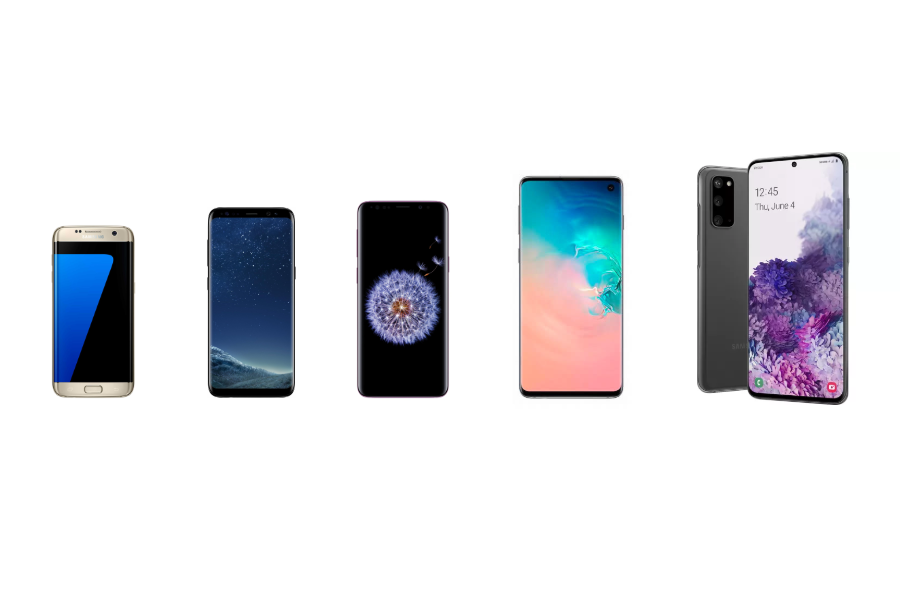
The following Galaxy S and Note Series models do not support the latest One UI 8 (Android 16) and are not receiving security updates as of 2026.
It’s important to point out that Note 20 and Note 20 Ultra were added to this list in late 2025. Samsung has completely stopped sending any security updates to these two models.
Galaxy S Series
| Model |
Released |
Initial Android Version |
Support Ended |
Last Android Version |
| Galaxy S | 2010 | 2.1 Eclair | 2012 | 2.3.6 Gingerbread |
| Galaxy S II | 2011 | 2.3.4 Gingerbread | 2013 | 4.1.2 Jelly Bean |
| Galaxy S III | 2012 | 4.0.4 Ice Cream Sandwich | 2015 | 4.4.4 KitKat |
| Galaxy S4 | 2013 | 4.2.2 Jelly Bean | 2017 | 5.0.2 Lollipop |
| Galaxy S5 | 2014 | 4.4.2 KitKat | 2019 | 6.0.1 Marshmallow |
| Galaxy S6 | 2015 | 5.0.2 Lollipop | 2019 | 7.0 Nougat |
| Galaxy S6 Edge | 2015 | 5.0.2 Lollipop | 2019 | 7.0 Nougat |
| Galaxy S7 | 2016 | 6.0.1 Marshmallow | 2020 | 8.0 Oreo |
| Galaxy S7 Edge | 2016 | 6.0.1 Marshmallow | 2020 | 8.0 Oreo |
| Galaxy S8 | 2017 | 7.0 Nougat | 2021 | 9.0 Pie |
| Galaxy S8+ | 2017 | 7.0 Nougat | 2021 | 9.0 Pie |
| Galaxy S9 | 2018 | 8.0 Oreo | 2022 | 10 |
| Galaxy S9+ | 2018 | 8.0 Oreo | 2022 | 10 |
| Galaxy S10 | 2019 | 9.0 Pie | 2023 | 12 |
| Galaxy S10+ | 2019 | 9.0 Pie | 2023 | 12 |
| Galaxy S10e | 2019 | 9.0 Pie | 2023 | 12 |
| Galaxy S10 5G | 2019 | 9.0 Pie | 2023 | 12 |
| Galaxy S20 | 2020 | 10 | 2025 | 13 |
| Galaxy S20+ | 2020 | 10 | 2025 | 13 |
| Galaxy S20 Ultra | 2020 | 10 | 2025 | 13 |
| Galaxy S20 FE | 2020 | 10 | 2026 | 13 |
| Galaxy S21 | 2021 | 11 | 2026 | 15 |
| Galaxy S21+ | 2021 | 11 | 2026 | 15 |
| Galaxy S21 Ultra | 2021 | 11 | 2026 | 15 |
Galaxy Note Series
| Model |
Released |
Initial Android Version |
Support Ended |
Last Android Version |
| Note | 2011 | 2.3.6 Gingerbread | 2013 | 4.1.2 Jelly Bean |
| Note II | 2012 | 4.1.1 Jelly Bean | 2015 | 4.4.2 KitKat |
| Note 3 | 2013 | 4.3 Jelly Bean | 2017 | 5.0 Lollipop |
| Note 3 Neo | 2014 | 4.3 Jelly Bean | 2017 | 5.1.1 Lollipop |
| Note 4 | 2014 | 4.4.4 KitKat | 2019 | 6.0.1 Marshmallow |
| Note Edge | 2014 | 4.4.4 KitKat | 2019 | 6.0.1 Marshmallow |
| Note 5 | 2015 | 5.1.1 Lollipop | 2019 | 7.0 Nougat |
| Note 7 | 2016 | 6.0.1 Marshmallow | 2016 | * Recalled |
| Note FE | 2017 | 7.0 Nougat | 2021 | 9.0 Pie |
| Note 8 | 2017 | 7.1.1 Nougat | 2021 | 9.0 Pie |
| Note 9 | 2018 | 8.1.0 Oreo | 2022 | 10 |
| Note 10 | 2019 | 9 | 2023 | 12 |
| Note 10+ | 2019 | 9 | 2023 | 12 |
| Note 10 Lite | 2020 | 9 | 2023 | 12 |
| Note 20 | 2020 | 10 | 2025 | 13 |
| Note 20 Ultra | 2020 | 10 | 2025 | 13 |
These devices remain functional but lack the latest features, optimizations, and security patches. Users should consider upgrading to newer models if these limitations become problematic.
⚠️ List of Models that are Close to End of Life
These models still support the current One UI 8 (Android 16), but Samsung has moved them from Monthly Update to Quarterly Update. These models are close to End of Life and may not support the upcoming One UI 9 (Android 17).
| Model |
Released |
Initial Android Version |
Current Android Version |
Software Update |
| Galaxy S21 FE | 2022 | 12 | 16 | Quarterly |
| Galaxy S22 | 2022 | 12 | 16 | Quarterly |
| Galaxy S22+ | 2022 | 12 | 16 | Quarterly |
| Galaxy S22 Ultra | 2022 | 12 | 16 | Quarterly |
After their final updates, these devices will still function and receive quarterly security updates but will no longer receive major Android upgrades. For users of these models, 2026 might be the time to start considering an upgrade.
✅ List of Models Supporting the Latest Android Version and Receiving Security Updates
All models below support the latest One UI 8 (Android 16) and receive monthly updates from Samsung. They are also expected to support the upcoming One UI 9 (Android 17).
| Model |
Released |
Initial Android Version |
Support Latest Android |
Software Updates |
| Galaxy S23 | 2023 | Android 13 | Yes | Monthly |
| Galaxy S23+ | 2023 | Android 13 | Yes | Monthly |
| Galaxy S23 Ultra | 2023 | Android 13 | Yes | Monthly |
| Galaxy S23 FE | 2023 | Android 13 | Yes | Monthly |
| Galaxy S24 | 2024 | Android 14 | Yes | Monthly |
| Galaxy S24+ | 2024 | Android 14 | Yes | Monthly |
| Galaxy S24 Ultra | 2024 | Android 14 | Yes | Monthly |
| Galaxy S24 FE | 2024 | Android 14 | Yes | Monthly |
| Galaxy S25 | 2025 | Android 15 | Yes | Monthly |
| Galaxy S25+ | 2025 | Android 15 | Yes | Monthly |
| Galaxy S25 Ultra | 2025 | Android 15 | Yes | Monthly |
| Galaxy S25 FE | 2025 | Android 15 | Yes | Monthly |
| Galaxy S25 Edge | 2025 | Android 15 | Yes | Monthly |
| Galaxy S26 | 2026 | Android 16 | Yes | Monthly |
| Galaxy S26+ | 2026 | Android 16 | Yes | Monthly |
| Galaxy S26 Ultra | 2026 | Android 16 | Yes | Monthly |
Recommendation
If you’re considering an upgrade, we strongly recommend buying Galaxy S23 or newer models like the Galaxy S24. These devices are still supported for Android OS upgrades and receive monthly security updates, ensuring optimal performance, enhanced security, and access to the latest features.
By choosing one of these models, you ensure that your device remains compatible with the latest apps, secure from vulnerabilities, and packed with features that keep it relevant for years to come. Explore certified refurbished options on trusted platforms like UpTrade to find the best deals on Galaxy S23 and S24 series devices.
FAQ: What Samsung Galaxy Phones Will Stop Working in 2026
1. Will any Samsung Galaxy phone completely stop working in 2026?
No. Even if your Galaxy phone stops receiving software support in 2026, it will still power on and work for basics like calls, texts, Wi-Fi, photos, and apps you already use. The real issue is that unsupported phones stop receiving Android OS upgrades and/or security updates, which can create security and compatibility problems over time.
2. What does it actually mean when a Galaxy phone “stops being supported”?
When support ends, Samsung stops providing updates for that model. Depending on the device, that can mean no more Android OS upgrades, no more security patches, or both. Over time, this increases security risks, reduces app compatibility, and can cause performance and stability issues.
3. Which Galaxy S and Note models are no longer receiving security updates as of 2026?
Older Galaxy S models up through the Galaxy S21 series and older Galaxy Note models—including the Note 20 and Note 20 Ultra—are no longer receiving security updates as of 2026. These devices still function, but they are no longer protected against newly discovered vulnerabilities.
4. What’s the difference between Monthly, Quarterly, and Bi-Annual updates?
Monthly Updates apply to newer flagship models and include frequent security patches and continued Android OS upgrades. Quarterly Updates provide security patches only and no longer include major Android upgrades. Bi-Annual Updates deliver minimal security patches twice per year and are limited to older budget devices, but Samsung canceled them in 2026.
5. Does Samsung’s “7 years” commitment guarantee 7 years of Android OS upgrades?
Yes. Samsung’s 7-year commitment applies to both Android OS upgrades and security updates. For example, Galaxy S24, launched in early 2024, will continue to receive the latest Android OS until early 2031.
6. Is it safe to keep using a Galaxy phone that no longer gets security updates?
It can still be used, but it’s not recommended—especially if you use your phone for banking, work, or storing sensitive data. Without security patches, vulnerabilities remain unpatched, increasing the risk of malware or data exposure over time.
7. Why did the Galaxy S21 series stop getting Android upgrades, but the S21 FE is still supported?
The Galaxy S21 FE launched later than the rest of the S21 lineup, so its support timeline extends further. Software support is based on launch date and policy, not just the model name.
8. Which Galaxy models are the best choices for long-term support in 2026?
For long-term value, choose models that support the latest Android version and receive monthly updates, such as the Galaxy S23, S24, and S25 series. These devices offer better security, performance, and app compatibility moving forward.
9. What’s the smartest upgrade path if my Galaxy is outdated in 2026?
If you’re using a Galaxy S20-era or Note 20-era device, upgrading to a Galaxy S23 or newer is a smart move. You’ll gain longer software support, better performance, improved cameras, and modern features like enhanced AI and 5G optimization.
10. Should I buy a Used or Refurbished Galaxy phone in 2026?
Yes—but always choose Certified Used or Refurbished devices. These phones are tested, restored, and often include warranty coverage, unlike regular used phones that may have battery degradation or hidden issues.
11. Where can I safely find good deals on newer Galaxy phones?
Using a trusted comparison platform like UpTrade allows you to compare Certified Used and Refurbished Galaxy phones across verified sellers, helping you find the best price without unnecessary risk.

 Sale
Sale