Introduction — Is iPad Pro 12.9-inch 6th Gen (2022) Worth Buying in 2026?
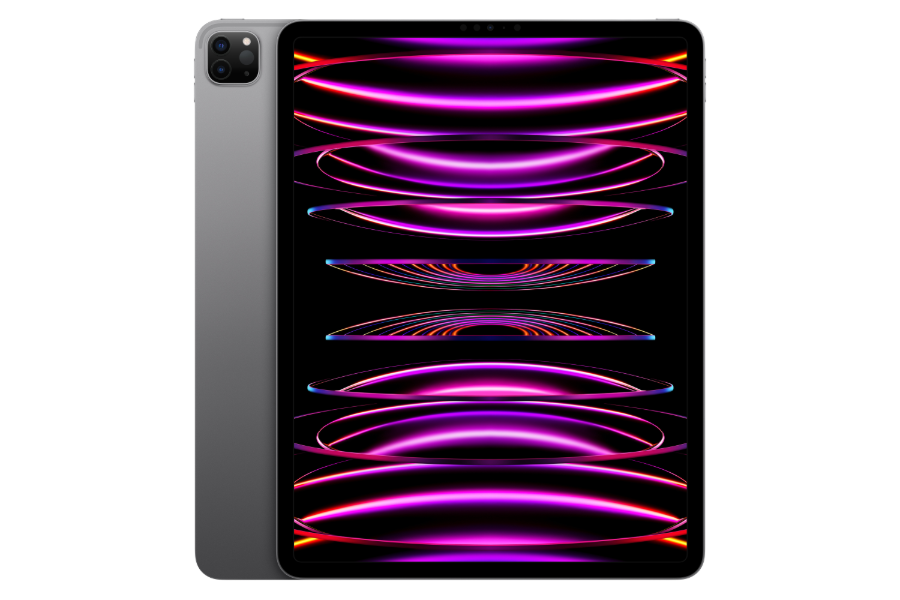
The iPad Pro 12.9-inch 6th Generation (2022) is still one of the most powerful tablets Apple has ever made. With Apple’s M2 chip, a stunning mini-LED Liquid Retina XDR display, and full support for iPadOS 26, it remains a premium device in 2026 — especially for users who want top-tier performance.
According to the UpTrade Price Tracker, Certified Used / Refurbished iPad Pro 12.9-inch 6th Gen (2022) models now start at around $660+, which is a significant drop from its original launch price. At face value, that looks like a solid deal for a flagship iPad Pro with years of software support remaining.
However, the real question in 2026 isn’t whether the 6th Gen is good — it clearly is. The real question is whether it’s worth the extra money, especially when a nearly identical iPad Pro with Apple Silicon is available for much less.
Quick Verdict — Should You Buy the iPad Pro 12.9-inch 6th Gen in 2026?
Yes — but only in very specific situations. For most buyers, we don’t recommend it.
The iPad Pro 12.9-inch 6th Gen (2022) checks all the right boxes:
- Apple M2 chip with excellent performance
- Mini-LED Liquid Retina XDR display
- ProMotion 120Hz refresh rate
- Full support for iPadOS 26 and future updates
But it runs into a serious value problem in 2026.
Why buyers consider it:
- Strong M2 performance
- Long remaining software support
- Premium display and build quality
- Discounted vs original MSRP
Why we don’t recommend it at $660+:
- Costs $160+ more than the 5th Gen
- Real-world performance gains over M1 are modest
- Same display, accessories, and Apple Pencil support as the cheaper model
- Better value exists in the lineup
UpTrade takeaway:
If you find the 6th Gen at a deep discount, it can make sense for power users. But at current pricing, the iPad Pro 12.9-inch 5th Gen (2021) starting at $500+ is the smarter buy for most people in 2026, delivering nearly the same experience for significantly less money.
If you’re shopping for a large-screen iPad Pro and care about value — not just specs on paper — the 6th Gen is good, but the 5th Gen is better.
What the iPad Pro 12.9-inch 6th Gen Still Does Well
To be clear, the iPad Pro 12.9-inch 6th Gen (2022) is an excellent tablet — and for certain users, it absolutely delivers a premium experience in 2026.
It continues to excel at:
- Heavy multitasking with multiple apps and split-screen workflows
- Creative work such as photo editing, video editing, and illustration
- Gaming and graphically intensive apps
- External display setups via Thunderbolt
- Smooth everyday use thanks to the 120Hz ProMotion display
The mini-LED Liquid Retina XDR display remains one of the best tablet screens available, especially for HDR content, creative work, and media consumption. Combined with Apple’s strong build quality, the hardware still feels modern, fast, and premium.
For users who want the newest possible refurbished 12.9-inch iPad Pro and don’t mind paying extra, the 6th Gen delivers exactly what you’d expect from a flagship Apple device.
That said, being “excellent” isn’t the same as being the best value — and this distinction becomes important once you look at price versus real-world gains.
Performance & Hardware — M2 in Real-World Use (2026)
The defining upgrade of the iPad Pro 12.9-inch 6th Gen is Apple’s M2 chip. On paper, it is faster than the M1 in the 5th Gen — especially in GPU-heavy workloads.
In benchmarks and sustained professional tasks, the M2 does pull ahead. However, in real-world usage in 2026, the difference is far smaller than many buyers expect.
For everyday tasks such as:
- Web browsing
- Streaming
- Note-taking
- Office and productivity apps
- Split-screen multitasking
…the M1 and M2 feel virtually identical. Both are fast, fluid, and more powerful than most users will ever fully utilize.
Where the M2’s advantage shows up:
- Large video exports
- Advanced 3D rendering
- Complex multi-layer design projects
- Sustained professional workloads
If you regularly push your iPad to its limits with demanding creative or technical work, the M2’s extra GPU power and memory bandwidth can be useful. But for the majority of users in 2026, these gains are incremental, not transformative.
This is a classic case of diminishing returns. The M2 is better — just not $160+ better for most buyers.
Software Support & Longevity — iPadOS 26 and Beyond
One area where the iPad Pro 12.9-inch 6th Gen unquestionably shines is software support.
Thanks to Apple Silicon, the device fully supports iPadOS 26, which means:
- Access to the latest iPadOS features
- Ongoing security updates
- Full compatibility with modern apps
- Strong resale value over time
Apple has consistently shown that M-series iPads receive longer and more consistent software support than older A-series models. Because the 6th Gen uses the M2 chip, it is reasonable to expect several more years of major iPadOS updates beyond 2026, followed by additional years of security updates.
From a longevity perspective, this is excellent news. A supported iPad:
- Remains safe for online use
- Stays compatible with new apps and services
- Feels current rather than outdated
However, this is where value comes back into the discussion.
The 5th Gen (2021) with the M1 chip also supports iPadOS 26 and is expected to receive updates for many years as well. While the 6th Gen may receive one additional iPadOS version at the very end of its lifecycle, the difference in real-world usable lifespan is likely smaller than the price gap suggests.
In short:
- Yes, the 6th Gen is future-proof
- But so is the 5th Gen — at a much lower price
And that’s why, for most buyers in 2026, the value equation favors the 5th Gen rather than the 6th Gen.
Better Value Alternative — iPad Pro 12.9-inch 5th Gen (2021)
When evaluating the iPad Pro 12.9-inch 6th Gen (2022) in 2026, the biggest question isn’t performance — it’s value. And this is where the iPad Pro 12.9-inch 5th Gen (2021) clearly wins.
According to the UpTrade Price Tracker:
- iPad Pro 12.9-inch 6th Gen (2022): ~$660+ Certified Used / Refurbished
- iPad Pro 12.9-inch 5th Gen (2021): ~$500+ Certified Used / Refurbished
That’s roughly a $160 price difference, which is significant — especially when the real-world experience between the two models is remarkably similar.
iPad Pro 12.9-inch 5th Gen vs 6th Gen — Specs Comparison
| Feature |
iPad Pro 12.9-inch 5th Gen (2021) |
iPad Pro 12.9-inch 6th Gen (2022) |
| Release Year |
2021 |
2022 |
| Chipset |
Apple M1 |
Apple M2 |
| Performance (2026) |
Excellent |
Slightly faster |
| Display |
12.9″ Liquid Retina XDR (mini-LED) |
12.9″ Liquid Retina XDR (mini-LED) |
| Refresh Rate |
120Hz ProMotion |
120Hz ProMotion |
| RAM |
8GB (base models) |
8GB (base models) |
| Storage Options |
128GB–2TB |
128GB–2TB |
| Apple Pencil Support |
Apple Pencil (1st & 2nd Gen) |
Apple Pencil (1st & 2nd Gen) |
| Keyboard Support |
Magic Keyboard |
Magic Keyboard |
| USB Port |
Thunderbolt / USB-4 |
Thunderbolt / USB-4 |
| Connectivity |
Wi-Fi 6 / 5G |
Wi-Fi 6E / 5G |
| Latest iPadOS Supported |
iPadOS 26 |
iPadOS 26 |
| Expected Longevity |
Long |
Slightly longer |
| Typical Price (2026) |
~$500+ |
~$660+ |
Key Differences That Matter in 2026
M1 vs M2 Performance — Smaller Than the Price Gap
The M2 chip is faster on paper, particularly in GPU-heavy workloads. However, in real-world use in 2026:
- Browsing, multitasking, note-taking → feel identical
- Productivity and creative apps → nearly identical
- Media consumption → identical
Unless you regularly run sustained professional workloads such as large video renders or advanced 3D modeling, the M1 already provides more power than most users will ever need.
For the majority of buyers, the M2’s performance gains do not justify a $160 premium.
Display — Exactly the Same Experience
Both models use the same:
- 12.9-inch mini-LED Liquid Retina XDR display
- 120Hz ProMotion refresh rate
- HDR performance and brightness
There is zero display advantage when choosing the 6th Gen over the 5th Gen.
Apple Pencil & Accessories — No Advantage
Despite common misconceptions:
- Neither model supports Apple Pencil Pro
- Both support Apple Pencil (1st Gen via adapter) and Apple Pencil (2nd Gen)
- Both work with the same Magic Keyboard and accessories
There is no ecosystem benefit to choosing the newer model here.
Software Support & Longevity
Both the 5th Gen (M1) and 6th Gen (M2):
- Support iPadOS 26
- Will receive major updates well into the late 2020s
- Remain secure and fully app-compatible
The 6th Gen may receive one additional iPadOS version at the very end of its lifecycle — but for most buyers, that difference is unlikely to matter in day-to-day use.
Value Verdict — The $160 Decision
This is where the comparison becomes very clear:
- The 5th Gen delivers 90–95% of the real-world experience
- The 6th Gen costs ~$160 more
In 2026, that price difference is far better spent on:
- More storage
- Accessories
- Apple Pencil
- Or simply saved
For most buyers, the iPad Pro 12.9-inch 5th Gen (2021) is the smarter, safer, and more cost-effective choice — offering nearly identical performance, the same stunning display, and long-term software support at a much lower price.
Conclusion — Is the iPad Pro 12.9-inch 6th Gen (2022) Worth Buying in 2026?
The short answer: yes, it’s a great iPad — but no, it’s not the best value in 2026.
The iPad Pro 12.9-inch 6th Gen (2022) remains a powerful and premium device. With the M2 chip, mini-LED Liquid Retina XDR display, ProMotion, Thunderbolt, and full support for iPadOS 26, it will continue to perform well and receive software updates for years to come.
However, value matters — especially in the Certified Used / Refurbished market.
At around $660+, the 6th Gen runs into a serious value problem. For roughly $160 less, the iPad Pro 12.9-inch 5th Gen (2021) delivers nearly the same real-world experience. Both models support iPadOS 26, both use Apple Silicon, both share the same mini-LED display, and both support the same Apple Pencil and accessories. For most users, the M2’s performance advantage over M1 is incremental, not transformative.
UpTrade’s recommendation:
Buy the iPad Pro 12.9-inch 6th Gen (2022) only if you specifically want the newest possible hardware or regularly run very heavy professional workloads where every bit of GPU performance matters.
For everyone else, the iPad Pro 12.9-inch 5th Gen (2021) is the smarter buy in 2026 — offering better value, nearly identical daily performance, and long-term software support at a much lower price.
FAQs — iPad Pro 12.9-inch 6th Gen (2022) in 2026
1. Is the iPad Pro 12.9-inch 6th Gen still good in 2026?
Yes. The iPad Pro 12.9-inch 6th Gen remains very fast and capable in 2026. With the M2 chip and support for iPadOS 26, it handles multitasking, creative apps, productivity, and media consumption smoothly.
2. Does the iPad Pro 12.9-inch 6th Gen support iPadOS 26?
Yes. It fully supports iPadOS 26, including the latest features, security updates, and modern app compatibility.
3. How long will the iPad Pro 12.9-inch 6th Gen be supported?
Apple doesn’t publish exact timelines, but M2-powered iPads are expected to receive major iPadOS updates well into the late 2020s, followed by additional years of security updates.
4. Is the M2 chip noticeably better than the M1 in 2026?
For most users, no. While the M2 is faster on paper, everyday tasks like browsing, multitasking, streaming, note-taking, and productivity feel nearly identical on M1 and M2. The difference mainly shows up in sustained professional workloads.
5. Is the iPad Pro 12.9-inch 6th Gen worth $660+?
It can be — but only for a narrow group of buyers. At that price, many users will get better value from the cheaper 5th Gen, which delivers almost the same experience for significantly less money.
6. Should I buy the iPad Pro 12.9-inch 6th Gen or 5th Gen in 2026?
Most buyers should choose the 5th Gen (2021). It offers Apple Silicon performance, iPadOS 26 support, the same mini-LED display, and nearly identical real-world performance for about $160 less.
7. Does the 6th Gen support Apple Pencil Pro?
No. The iPad Pro 12.9-inch 6th Gen does not support Apple Pencil Pro. It supports Apple Pencil (1st Gen via adapter) and Apple Pencil (2nd Gen), the same as the 5th Gen.
8. Is the iPad Pro 12.9-inch 6th Gen good for students or professionals?
Yes. It works extremely well for both, especially when paired with the Magic Keyboard and Apple Pencil (2nd Gen). That said, most students and professionals will be just as well served by the 5th Gen at a lower cost.
9. Is it safe to buy a refurbished iPad Pro 12.9-inch 6th Gen?
Yes — as long as you buy Certified Used or Refurbished units from trusted sellers. These devices are professionally tested, cleaned, and typically include a warranty.
10. Who should buy the iPad Pro 12.9-inch 6th Gen in 2026?
This model is best for buyers who:
- Want the newest hardware available in the refurbished market
- Regularly run demanding creative or professional workloads
- Don’t mind paying a premium for incremental performance gains
For everyone else, the 5th Gen remains the better value.

 Sale
Sale