Introduction — Is iPad Pro 12.9-inch 5th Gen (2021) Worth Buying in 2026?
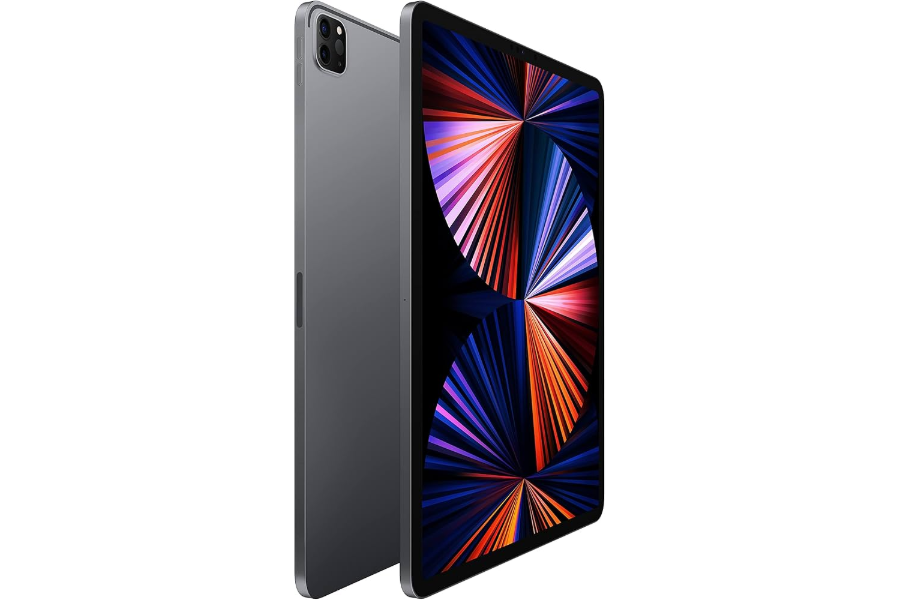
The iPad Pro 12.9-inch 5th Generation (2021) was a major milestone in Apple’s iPad lineup. It was the first 12.9-inch iPad Pro to transition from Apple’s A-series chips to Apple Silicon (M1) — instantly elevating performance, multitasking, and long-term software potential.
Fast-forward to 2026, and this model has quietly become one of the best-value large-screen iPad Pros on the market.
Quick Verdict — Should You Buy the iPad Pro 12.9-inch 5th Gen in 2026?
Yes — absolutely. We highly recommend buying the iPad Pro 12.9-inch 5th Gen (2021) in 2026.
Why it makes sense in 2026:
- Apple M1 chip, delivering laptop-class performance
- Mini-LED Liquid Retina XDR display exclusive to 12.9-inch models
- Full support for iPadOS 26
- Only ~$40 more than the 4th Gen, but with far better long-term value
- Excellent pricing at ~$500+ Certified Used / Refurbished
What to keep in mind:
- Does not support the newest Apple Pencil Pro
- Supports Apple Pencil (1st Gen and 2nd Gen) instead — which is still more than enough for most users
UpTrade takeaway:
If you want a large-screen iPad Pro that will stay fast, supported, and useful for years — without paying new-device prices — the iPad Pro 12.9-inch 5th Gen is one of the smartest purchases you can make in 2026.
(For what it’s worth, this is also the model I personally bought for my son recently. Of course, it’s Certified Refurbished.)
Why the iPad Pro 12.9-inch 5th Gen Is a Standout in 2026
The iPad Pro 12.9-inch 5th Gen (2021) sits in a uniquely strong position in 2026. It combines Apple Silicon performance, a best-in-class display, and long-term software support at a price that’s no longer “Pro-expensive.”
At around $500+ Certified Used / Refurbished, this model delivers capabilities that were once reserved for Apple’s top-tier devices — but now at a price point that makes real sense for families, students, creatives, and professionals.
What truly sets the 5th Gen apart is timing. It was the first 12.9-inch iPad Pro to adopt the M1 chip, and Apple has clearly prioritized Apple Silicon devices when it comes to performance optimization and software longevity. In practice, that means this iPad Pro still feels modern, fast, and capable — not like a device that’s clinging to relevance.
For buyers who want a large-screen iPad that can last several more years, this generation hits a rare sweet spot between price, power, and future-proofing.
Performance & Hardware — Why the M1 Still Matters in 2026
The M1 chip is the single most important reason the iPad Pro 12.9-inch 5th Gen remains such a compelling buy.
Even in 2026, the M1:
- Handles heavy multitasking with ease
- Runs creative apps like video editors, illustration tools, and design software smoothly
- Supports external displays and advanced workflows
- Delivers consistent performance without noticeable slowdowns
For everyday users, this translates into a device that feels fast and responsive no matter what you’re doing — whether it’s schoolwork, media consumption, or productivity. For power users, it means the iPad Pro can realistically replace a laptop for many workflows.
Just as importantly, apps continue to be optimized for Apple Silicon. That gives the M1-powered 5th Gen a longer usable lifespan than older A-series iPad Pros. While newer M-series chips exist, the real-world gap between M1 and newer chips is relatively small for most use cases in 2026.
In short, the M1 is no longer “new” — but it’s still extremely capable, efficient, and relevant.
Display Advantage — Mini-LED XDR Still Makes a Big Difference
One feature that truly separates the 12.9-inch iPad Pro lineup from smaller models is the display — and the 5th Gen is where Apple introduced mini-LED Liquid Retina XDR.
Even in 2026, this display remains outstanding.
The mini-LED XDR panel offers:
- Significantly higher brightness
- Deeper blacks and better contrast
- More consistent performance for HDR content
- A noticeably more immersive large-screen experience
This matters most for:
- Watching movies and high-quality video
- Photo and video editing
- Drawing and design work
- Multitasking with multiple apps on screen
Compared to the older 12.9-inch 4th Gen (2020), which uses a standard LCD panel, the display upgrade alone is noticeable — especially when viewing darker content or working in bright environments.
If screen quality is important to you, the 5th Gen’s display is still one of the best reasons to choose it over older iPad Pro models.
Software Support & Longevity — iPadOS 26 and Beyond
Software support is one of the most important factors when buying a Certified Used or Refurbished iPad in 2026 — and this is where the iPad Pro 12.9-inch 5th Gen (2021) truly shines.
The device fully supports iPadOS 26, which means:
- Access to the latest features and multitasking improvements
- Ongoing security updates
- Full compatibility with modern apps
- Better long-term resale value
Apple has made its direction very clear over the past few years: Apple Silicon iPads receive longer and more consistent software support than older A-series models. Because the 5th Gen uses the M1 chip, it sits firmly on the right side of Apple’s support roadmap.
In practical terms, this means the iPad Pro 12.9-inch 5th Gen is expected to:
- Continue receiving major iPadOS updates for several more years
- Remain secure and fully usable well into the late 2020s
- Avoid the early obsolescence that affects older A-series iPad Pros
When compared to the 12.9-inch 4th Gen (2020), which uses the A12Z chip, the difference in software outlook is meaningful. While the 4th Gen may still receive updates in the near term, its remaining support window is likely shorter than the M1-powered 5th Gen.
For buyers planning to keep their iPad for multiple years — especially students, families, and professionals — this matters just as much as raw performance.
Caveat: Apple Pencil Support
One caveat worth calling out is Apple Pencil support.
The iPad Pro 12.9-inch 5th Gen supports Apple Pencil (1st Gen) and Apple Pencil (2nd Gen). However, it does not support the latest Apple Pencil Pro.
For most users, this won’t matter. Apple Pencil (2nd Gen) remains excellent for:
- Note-taking
- Drawing and sketching
- Annotation and markup
- Creative and educational use
Apple Pencil Specs Comparison — 1st Gen vs 2nd Gen vs Apple Pencil Pro
| Feature |
Apple Pencil (1st Gen) |
Apple Pencil (2nd Gen) |
Apple Pencil Pro |
| Release Year |
2015 |
2018 |
2024 |
| Charging Method |
Lightning connector (cap) |
Magnetic charging on iPad |
Magnetic charging on iPad |
| Pairing Method |
Plug into Lightning port |
Magnetic attachment |
Magnetic attachment |
| Pressure Sensitivity |
Yes |
Yes |
Yes (improved) |
| Tilt Sensitivity |
Yes |
Yes |
Yes (improved) |
| Hover Support |
No |
Limited (iPad-dependent) |
Yes (enhanced) |
| Double-Tap Gesture |
No |
Yes |
Yes (customizable) |
| Squeeze Gesture |
No |
No |
Yes |
| Haptic Feedback |
No |
No |
Yes |
| Find My Support |
No |
No |
Yes |
| Precision & Latency |
Good |
Excellent |
Best |
| Designed For |
Basic note-taking & drawing |
Serious note-taking & creative work |
Advanced creative & professional workflows |
| Compatible iPads |
Older Lightning iPads |
USB-C iPads (2018–2023) |
Newest M-series iPads only |
| Supported by iPad Pro 12.9″ 5th Gen (2021) |
Yes |
Yes |
No |
Key Takeaways (Plain English)
Apple Pencil (1st Gen):
Still usable for basic note-taking and casual drawing, but charging and pairing are outdated.
Apple Pencil (2nd Gen):
The best balance for most users — easy magnetic charging, excellent precision, and wide app support.
👉 This is the best option for the iPad Pro 12.9-inch 5th Gen (2021).
Apple Pencil Pro:
Built for advanced creators with squeeze gestures, haptics, and Find My — but only works with the newest iPads.
👉 Not supported on the iPad Pro 12.9-inch 5th Gen (2021).
If you absolutely need the newest Apple Pencil Pro features, this could be a deal breaker. But for the vast majority of buyers in 2026, Apple Pencil (2nd Gen) is more than sufficient — and still widely supported across apps.
iPad Pro 12.9-inch 5th Gen (2021) vs 4th Gen (2020)
At a glance, the iPad Pro 12.9-inch 4th Gen (2020) and 5th Gen (2021) look very similar. They share the same design, size, and accessory support. However, under the hood, the differences are significant — and in 2026, they matter more than ever.
According to the UpTrade Price Tracker, the price gap between these two models has narrowed dramatically, making the decision much easier than it once was.
Specs Comparison — iPad Pro 12.9-inch 5th Gen vs 4th Gen
| Feature |
iPad Pro 12.9-inch 4th Gen (2020) |
iPad Pro 12.9-inch 5th Gen (2021) |
| Release Year |
2020 |
2021 |
| Chipset |
A12Z Bionic |
Apple M1 |
| Performance Class (2026) |
Good, but aging |
Excellent, Apple Silicon |
| Display |
12.9″ Liquid Retina (LCD) |
12.9″ Liquid Retina XDR (mini-LED) |
| Refresh Rate |
120Hz ProMotion |
120Hz ProMotion |
| RAM |
6GB |
8GB (base models) |
| Storage Options |
128GB–1TB |
128GB–2TB |
| Apple Pencil Support |
Apple Pencil (2nd Gen) |
Apple Pencil (1st & 2nd Gen) |
| Keyboard Support |
Magic Keyboard |
Magic Keyboard |
| USB Port |
USB-C |
Thunderbolt / USB-4 |
| External Display Support |
Limited |
Much stronger |
| Connectivity |
Wi-Fi 6 / LTE |
Wi-Fi 6 / 5G |
| Latest iPadOS Supported |
iPadOS 26 |
iPadOS 26 |
| Expected Longevity |
Shorter |
Significantly longer |
| Typical Price (2026) |
~$460+ |
~$500+ |
Key Differences That Matter in 2026
Apple Silicon vs A-Series (Biggest Difference)
The single most important upgrade is the move from the A12Z Bionic to Apple’s M1 chip.
In real-world terms, the M1 delivers:
- Far better multitasking
- Stronger performance for creative and professional apps
- Improved external display support
- A much longer software support runway
While the A12Z still works in 2026, it’s clearly closer to the end of its performance lifecycle than the beginning.
Display — Mini-LED XDR vs LCD
The 5th Gen introduces mini-LED Liquid Retina XDR, which is a meaningful upgrade over the standard LCD panel on the 4th Gen.
Benefits include:
- Higher brightness
- Better contrast and deeper blacks
- Superior HDR performance
- A more immersive experience for media and creative work
If display quality matters to you, this upgrade alone can justify the move to the 5th Gen.
Performance & Multitasking
Both iPads feel smooth for basic tasks, but once you push the device:
- Split-screen multitasking
- External displays
- Video editing
- Drawing and design apps
…the M1-powered 5th Gen clearly pulls ahead. It handles heavier workloads more comfortably and ages far more gracefully.
Connectivity & I/O
The 5th Gen upgrades from standard USB-C to Thunderbolt / USB-4, unlocking:
- Faster data transfer
- More capable docks and accessories
- Better external display workflows
This is especially valuable for professionals and students using the iPad as a laptop replacement.
Longevity & Value
For roughly $40 more:
- You get Apple Silicon (M1)
- A significantly better display
- Longer software support
- Better long-term value
Over several years of use, the 5th Gen is actually cheaper to own, because it won’t need replacing as soon as the 4th Gen.
Bottom Line — Is the Upgrade Worth It?
Yes — absolutely.
In 2026, the iPad Pro 12.9-inch 5th Gen (2021) is clearly worth the small price premium over the 4th Gen. The jump to Apple Silicon and mini-LED display makes it a far better long-term investment.
iPad Pro 12.9-inch 5th Gen (2021) vs 6th Gen (2022)
At first glance, the iPad Pro 12.9-inch 6th Gen (2022) looks like a meaningful upgrade over the 5th Gen (2021). It uses Apple’s newer M2 chip and supports Wi-Fi 6E, which sounds appealing on paper. However, once you look past the spec sheet, the real-world differences in 2026 are much smaller than the price gap suggests.
According to the UpTrade Price Tracker, Certified Used / Refurbished pricing looks like this:
- iPad Pro 12.9-inch 5th Gen (2021): ~$500+
- iPad Pro 12.9-inch 6th Gen (2022): ~$660+
That’s roughly a $160 premium for the newer model — which makes it important to understand what you’re actually getting for that extra money.
Specs Comparison — iPad Pro 12.9-inch 5th Gen vs 6th Gen
| Feature |
iPad Pro 12.9-inch 5th Gen (2021) |
iPad Pro 12.9-inch 6th Gen (2022) |
| Release Year |
2021 |
2022 |
| Chipset |
Apple M1 |
Apple M2 |
| Performance Class (2026) |
Excellent |
Slightly faster |
| Display |
12.9″ Liquid Retina XDR (mini-LED) |
12.9″ Liquid Retina XDR (mini-LED) |
| Refresh Rate |
120Hz ProMotion |
120Hz ProMotion |
| RAM |
8GB (base models) |
8GB (base models) |
| Storage Options |
128GB–2TB |
128GB–2TB |
| Apple Pencil Support |
Apple Pencil (1st & 2nd Gen) |
Apple Pencil (1st & 2nd Gen) |
| Keyboard Support |
Magic Keyboard |
Magic Keyboard |
| USB Port |
Thunderbolt / USB-4 |
Thunderbolt / USB-4 |
| Connectivity |
Wi-Fi 6 / 5G |
Wi-Fi 6E / 5G |
| Latest iPadOS Supported |
iPadOS 26 |
iPadOS 26 |
| Expected Longevity |
Long |
Slightly longer |
| Typical Price (2026) |
~$500+ |
~$660+ |
Key Differences That Matter in 2026
Apple Pencil Support — No Difference
Despite common confusion, neither model supports Apple Pencil Pro.
Both the 5th Gen and 6th Gen support:
- Apple Pencil (1st Gen) via adapter
- Apple Pencil (2nd Gen) with magnetic charging
This means there is zero Apple Pencil advantage when upgrading from the 5th Gen to the 6th Gen.
M1 vs M2 Performance
The M2 chip is faster on paper, but in real-world use in 2026:
- Browsing, multitasking, note-taking → feel identical
- Productivity and creative apps → nearly identical
- Media consumption → identical
The performance gap only becomes noticeable in sustained professional workloads like large video exports or complex 3D projects. For most users, the M1 already delivers more power than they’ll realistically need.
Connectivity Improvements
The 6th Gen adds Wi-Fi 6E, while the 5th Gen uses Wi-Fi 6. This can be useful in very specific network environments, but for most users, it does not meaningfully change day-to-day performance.
Value Verdict
When you remove Apple Pencil confusion from the equation, the value comparison becomes very clear:
- The 5th Gen delivers nearly the same experience
- The 6th Gen costs about $160 more
We recommend staying with the 5th Gen.
Conclusion — Is the iPad Pro 12.9-inch 5th Gen (2021) Worth Buying in 2026?
Yes — the iPad Pro 12.9-inch 5th Gen (2021) is absolutely worth buying in 2026, and it’s one of the best large-screen iPad values available today.
At around $500+ Certified Used / Refurbished, the iPad Pro 12.9-inch 5th Gen (2021) hits a rare sweet spot. For only about $40 more than the 4th Gen (2020), you get Apple Silicon performance with the M1 chip, full support for iPadOS 26, a stunning mini-LED Liquid Retina XDR display, and significantly better long-term software prospects.
Compared to the 6th Gen (2022), which starts around $660+, the value case becomes even clearer. While the 6th Gen uses the M2 chip, the real-world performance difference in 2026 is modest, and both models support the same Apple Pencil (1st and 2nd Gen) and the same accessories. For most users, the extra $160+ simply doesn’t translate into a meaningfully better daily experience.
UpTrade’s recommendation is clear:
- Buy the iPad Pro 12.9-inch 5th Gen (2021) if you want the best balance of performance, display quality, longevity, and price.
- Skip the 4th Gen if you can afford the small step up.
- Don’t choose the 6th Gen unless you specifically need marginal M2 performance gains or find it at a much deeper discount.
For students, creatives, professionals, and families looking for a large, premium iPad that will stay relevant for years, the iPad Pro 12.9-inch 5th Gen (2021) is the smartest long-term buy in 2026.
FAQs — iPad Pro 12.9-inch 5th Gen (2021) in 2026
1. Is the iPad Pro 12.9-inch 5th Gen still good in 2026?
Yes. Thanks to the M1 chip and support for iPadOS 26, the 5th Gen remains fast, smooth, and highly capable in 2026 for productivity, creative work, multitasking, and media consumption.
2. How old is the iPad Pro 12.9-inch 5th Gen in 2026?
The 5th Gen was released in 2021, which makes it about 5 years old in 2026 — still well within Apple’s typical high-performance support window.
3. Does the iPad Pro 12.9-inch 5th Gen support iPadOS 26?
Yes. It fully supports iPadOS 26, including modern multitasking features, app compatibility, and ongoing security updates.
4. How long will the iPad Pro 12.9-inch 5th Gen be supported?
Apple doesn’t publish exact timelines, but M1-powered iPads are expected to receive major iPadOS updates well into the late 2020s, plus additional years of security updates.
5. Is the M1 chip still powerful enough in 2026?
Absolutely. The M1 still handles demanding workloads such as photo editing, video editing, multitasking, and external displays with ease. Most users will not feel limited by M1 performance in 2026.
6. What Apple Pencil does the iPad Pro 12.9-inch 5th Gen support?
It supports Apple Pencil (1st Gen) via adapter and Apple Pencil (2nd Gen) with magnetic charging.
It does not support Apple Pencil Pro, but neither does the 6th Gen (2022).
7. Is the iPad Pro 12.9-inch 5th Gen better than the 4th Gen (2020)?
Yes. For about $40 more, the 5th Gen offers Apple Silicon (M1), better long-term software support, and significantly improved longevity — making it a much smarter buy.
8. Is the 6th Gen (2022) worth the extra money over the 5th Gen?
For most users, no. While the M2 chip is faster, the real-world difference is small, and both models share the same display, accessories, and Apple Pencil support. The price premium is hard to justify for most buyers.
9. Is the iPad Pro 12.9-inch 5th Gen good for students or professionals?
Yes. With Magic Keyboard and Apple Pencil (2nd Gen) support, it works extremely well for students, creatives, and professionals who want a laptop-class tablet experience.
10. Is it safe to buy a refurbished iPad Pro 12.9-inch 5th Gen?
Yes — as long as you buy Certified Used / Refurbished units from trusted sellers. These devices are professionally tested, cleaned, and typically include a warranty, making them far safer than buying from individual sellers.

 Sale
Sale